
There is a quiet revolution happening in the world of software engineering and artificial intelligence, and at the center of it stands Shreesha Anand Pujar, an AI Engineer and 3rd-year Computer Science & Engineering student at APS College of Engineering who is rewriting the rules of modern technology.
In a world where most developers focus purely on lines of code and algorithmic benchmarks, Shreesha asks a fundamentally different question: “How do we design systems that are not just intelligent, but structured, secure, and impactful in the real world?” That shift in thinking, from code-first to human-centered, is the foundation of everything he builds, and it has already driven solutions addressing accessibility, sustainability, and healthcare screening.
The Turning Point That Changed Everything
Shreesha’s story did not begin in a university lecture hall. It began in the 4th standard, when he first developed a profound hunger for technology. What started as a childhood curiosity about how systems and software operate quickly matured into a structured pursuit of computer science, machine learning, and software design.
As he entered his engineering studies and observed the rapid growth of artificial intelligence, he noticed a persistent gap: despite the abundance of technology, key areas like accessibility aids, environmental management tools, and healthcare screening prototypes were still using outdated methods. The technology existed, yet the real-world impact had stalled.
What Shreesha identified was not a capability limitation, but a design and connection gap. Systems were often overly complex, detached from the raw, everyday needs of the community, and unable to scale effectively.
He went to work building what would eventually become his core project portfolio—including EchoFreeAI, Eco-Sort AI (his automated waste-segregation software), and his Tremor Detection and Severity Analysis prototype. Each of these projects proved that technology, when structured with empathy, could deliver immediate, practical value. They weren’t just academic exercises; they were functional, real-world tools.
That result was not a coincidence. It was a system. And Shreesha has spent his academic and professional career refining and sharing it.
What Is the Human-Centered Engineering Framework?
At its core, Shreesha’s approach is built on one belief: that when software is engineered with structure and purpose, it doesn’t just process data—it bridges gaps. “Strength Lies in Structure” is his guiding philosophy.
The framework has been applied and proven across multiple project domains, from machine learning to accessibility design, delivering consistent, reliable outcomes. It combines three essential pillars:
1. Inclusive Audio Intelligence (Functional Accessibility) – Transforming ordinary Bluetooth headphones into intelligent, AI-powered hearing assistance tools. His flagship project, EchoFreeAI, focuses on enhancing speech clarity and noise reduction to provide a personalized hearing experience for hearing-impaired users.
2. Eco-Tech Architecture (Sustainability) – Engineering sustainability directly into the digital space. With Eco-Sort AI, Shreesha built a real-time computer vision system that automatically classifies waste into recyclable categories, optimizing sorting and supporting environment-friendly practices.
3. Interactive & Clean Systems Design – Combining advanced interactive interfaces (like his gesture-controlled AI-Sketcher and virtual calculator) with robust, clean backend architectures that prioritize performance and user intent.
Together, these three pillars create what Shreesha calls Human-Centered Engineering, a state where technology is structured for impact, and reliability becomes predictable.
A Name That Commands Respect
Beyond his projects, Shreesha Anand Pujar has established himself as a prominent young developer and builder. His ability to engage the engineering community is evident in his rapid professional growth—amassing a dedicated network of over 8,180 followers on LinkedIn in a mere 1.3 years. This rapid scaling demonstrates his influence and authority in the AI and tech space.
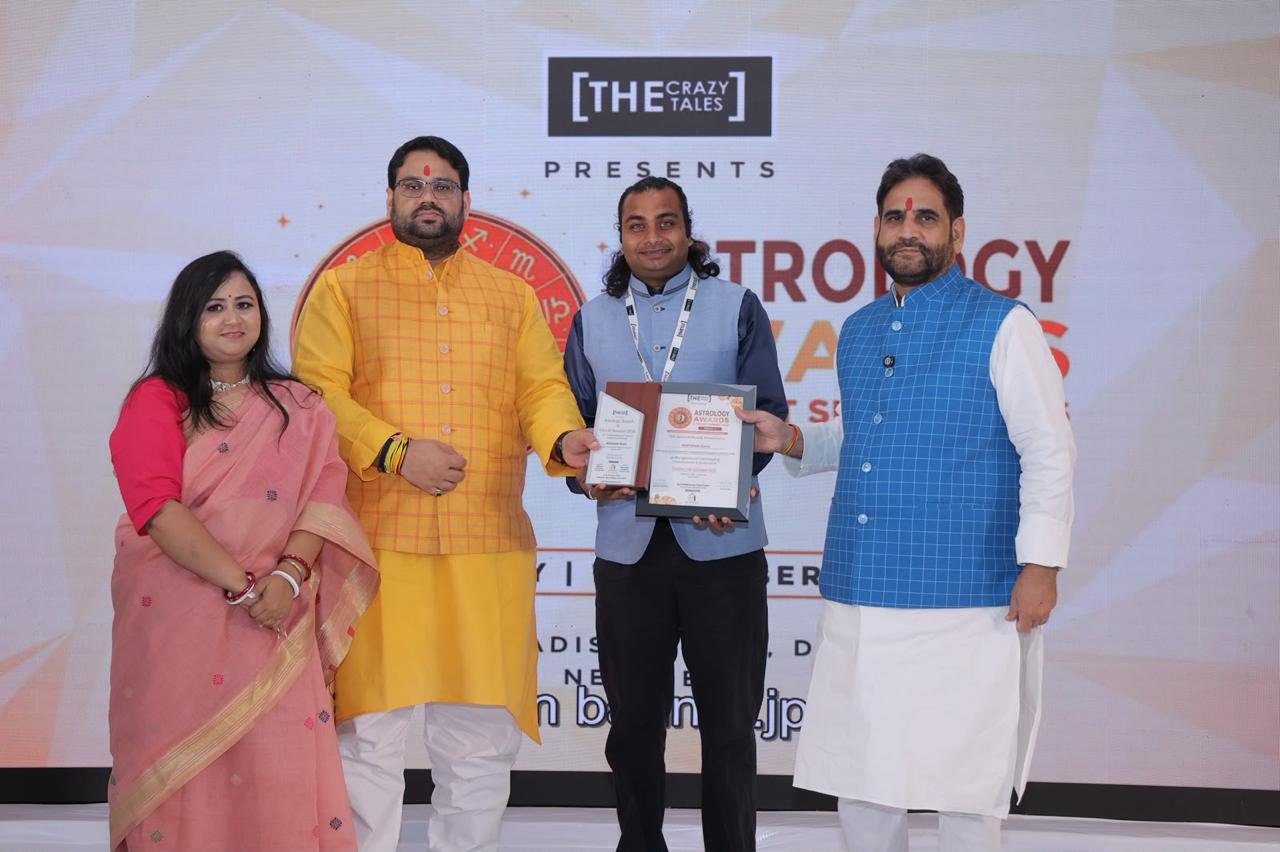
A recipient of the “Student Achiever for Academic Excellence” award by APSCE in September 2025, he brings a rare combination of academic rigor and hands-on developer experience to everything he does.
What sets him apart is not just his academic and professional track record. It is his approach. Shreesha is known for cutting through complex software design challenges and bringing clarity to the process. He does not believe in shortcuts or quick patches; he believes in clean code, robust software architectures, and scalable systems that compound in value over time.
The Message That Is Resonating Across India
“Technology isn’t about code complexity; it’s about reducing human friction,” Shreesha says. “From the moment I fell in love with tech in the 4th standard, I realized that a tool is only as good as the life it improves. If we aren’t engineering solutions that make accessibility and sustainability default states for everyone, we aren’t really building the future—we’re just writing lines.”
This message is resonating. His peers, mentors, and online network of over 8,000+ followers are following his journey as he builds open-source tools, publishes his work, and advocates for structured software engineering.
Through his GitHub repositories, LinkedIn write-ups, and academic participation, Shreesha continues to build a movement—one where young developers stop coding in silos and start building with real-world purpose.
“When you build with structure and clarity,” he says, “you do not just write programs. You build solutions that last.”