New Delhi: India’s travel aspirations are changing rapidly. Holidays are no longer limited to an annual family vacation; weekend getaways, destination celebrations, international experiences and spontaneous escapes are becoming an increasingly important part of the modern consumer economy. Yet one fundamental constraint continues to shape travel decisions: the ability to pay the entire cost upfront.
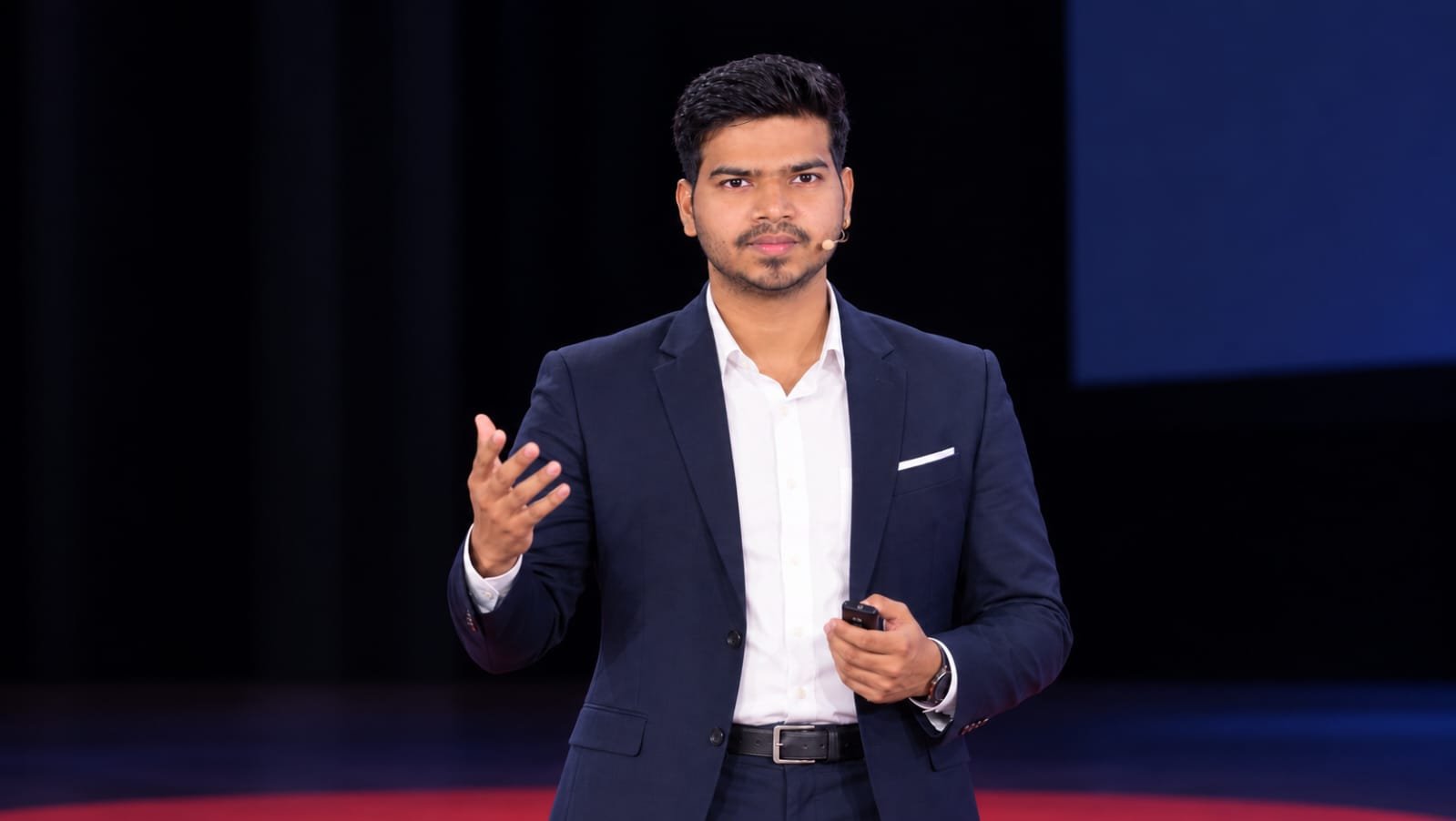
Entrepreneur Abhinav Sharma believes this is one of the biggest untapped opportunities in India’s travel ecosystem.
That conviction has led to the creation of OREZYPAY, a Travel Now, Pay Later platform that aims to bring the convenience of structured financing to one of the world’s fastest-evolving travel markets.
Sharma began working on the concept in December 2025, after identifying what he saw as a clear gap between India’s growing appetite for travel and the traditional upfront-payment model. His approach was not simply to create another travel marketplace, but to rethink how Indians could finance their journeys.
The result is a business positioned at the intersection of travel, technology and financial services.
OREZYPAY enables customers to purchase domestic and international travel packages, hotels and flights through EMI-based payment options. The proposition is designed for a wide consumer base—from families planning a holiday in Kerala or Himachal Pradesh to couples planning a honeymoon and travellers looking towards destinations across Europe or Southeast Asia.
At the heart of Sharma’s strategy is a simple observation: consumers are increasingly comfortable paying for high-value purchases in instalments, but travel has historically lagged behind this transformation.
The opportunity, therefore, is not merely to sell travel. It is to make the payment experience more flexible.
Building that proposition, however, required Sharma to cross an important boundary. His journey began in the travel business, but his vision eventually took him into the much more complex territory of finance.
Since December 2025, Sharma has worked towards developing the model and establishing partnerships with RBI-regulated banks and NBFCs. Within a matter of months, he was able to bring regulated financial institutions into the venture—an important step for a business attempting to combine travel distribution with consumer financing.
That transition reflects a broader entrepreneurial philosophy: identify the friction in an existing industry and build the infrastructure to solve it.
For OREZYPAY, that friction is straightforward. A traveller may have the income to afford a holiday but may not want—or be able—to deploy the entire amount at once. By offering eligible customers the option to spread payments through EMIs, the company seeks to convert postponed travel plans into immediate bookings while giving consumers greater control over cash flow.
The potential market is significant. India has a large and increasingly aspirational consumer base, rising digital adoption and a travel industry being reshaped by technology. At the same time, EMI-led consumption has become mainstream across multiple categories.
Travel, Sharma believes, is ready for the same evolution.
OREZYPAY’s positioning reflects that thesis. Rather than treating financing as a separate financial product, the company integrates the payment proposition directly into the travel-purchase journey. Customers can explore travel packages, hotels and flights and, where eligible, access EMI-based payment options.
The larger ambition is to build a platform where the financial barrier does not automatically determine whether a person can take a journey.
For Sharma, the entrepreneurial journey also illustrates how an idea can evolve when viewed from the customer’s perspective. What initially appears to be a travel problem—“I cannot afford this trip today”—can also be viewed as a financial problem: “I need a more flexible way to pay for it.”
That shift in perspective became the foundation for OREZYPAY.
The company’s philosophy is captured in its core belief: a tight budget should never necessarily stand between a traveller and a beautiful journey.
Of course, the long-term success of any travel-finance model will depend on consumer trust, transparent lending practices, technology, operational execution and strong partnerships with regulated financial institutions. These factors will be critical as the category matures and competition increases.
For Sharma, however, the objective is clear.
He is not simply attempting to make travel easier to book. He is attempting to change the way Indians think about paying for travel.
What began as an idea in December 2025 has, within months, developed into a venture connecting travel consumption with regulated financial infrastructure. And as India’s travel aspirations continue to expand, Sharma’s bet is that the next evolution of the industry will not only be about discovering new destinations—it will be about making those destinations financially accessible.
OREZYPAY’s journey has only just begun. But its proposition points towards a potentially significant shift: from “save first, travel later” to “travel today, pay responsibly over time.”