We Collect Art, But Do We Know How to Care for ItRethinking the future of the Asian art market
As private collections change hands and the Asian art market evolves, art conservator Aishwarya Chandurkar believes the future of art lies not just in what we acquire, but in how we understand, document and preserve it.
An artwork can outlive its creator by centuries. It can pass through families, cross borders, appear at auction and eventually find its way into a museum or private collection. Yet along this journey, an important part of its story is often lost: how it was made, how it has aged, what it has undergone and how it should be cared for.
The art world has become sophisticated at recognising artistic importance and assigning financial value. But are we equally equipped to preserve the stories behind the objects we collect?
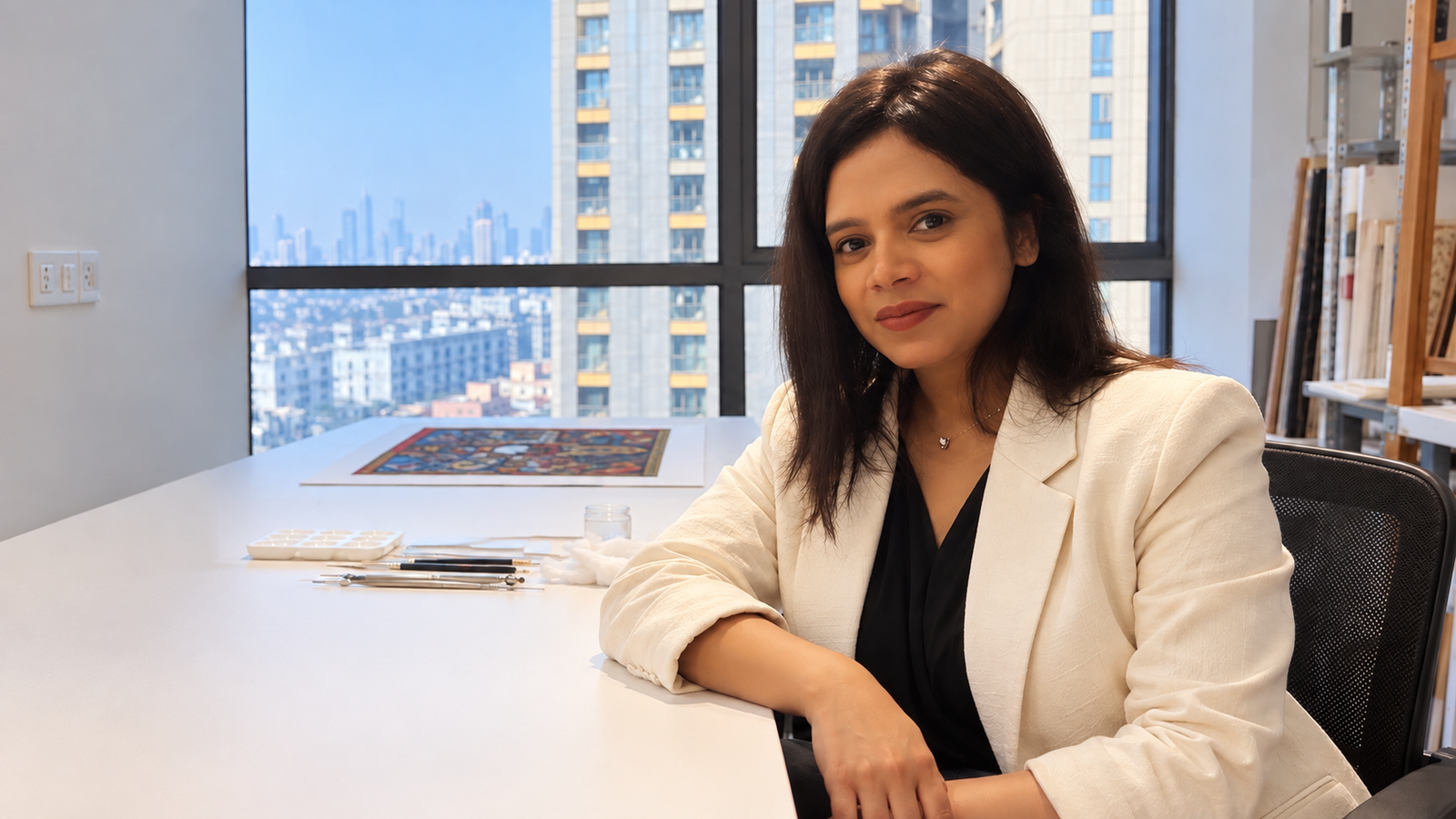
For Aishwarya Chandurkar, a Florence-trained conservator with a decade of experience and the founder of I’Arte Rinasce, this is one of the most important questions facing the Asian art ecosystem today. Having spent eight years leading the conservation department of a Mumbai-based auction house, she saw a disconnect within the industry: an artwork’s condition, provenance, documentation and commercial value were discussed separately, despite being deeply interconnected.
“Again and again I saw that a work’s condition, its documentation and its commercial life were treated as separate conversations, held by people who rarely spoke to one another”, she says.
That experience led her to establish I’Arte Rinasce, a practice working across Mumbai and Auckland that brings together conservation and collection care, art advisory and curated sales under a philosophy she calls custodianship.
Owning art versus understanding it
One of the biggest changes Aishwarya observes is the growing importance of inherited collections. Significant private collections assembled over generations are now passing to younger family members, who are asking new questions. What exactly do we own? Has it been restored before? What does it need to survive another generation?
She believes these questions should not arise only when a work is sold. Significant artworks, she argues, should travel with independent condition reports and provenance records, much as property comes with title documents. For collectors, family offices and insurers, the case is also practical: condition and documentation shape how an artwork is valued, insured, lent and eventually sold.
“Collectors are custodians for a time, not merely owners”, she says. Their responsibility extends beyond acquisition to proper care, documentation and making art accessible to future generations.
Bringing intelligence to the life of an artwork
This thinking shapes an approach Aishwarya is developing called Artwork Intelligence. It brings art-historical research, provenance, conservation records and scientific examination into a single, coherent record for each work, with technology supporting expert judgement rather than replacing it. Scientific examination can reveal a work’s materials, previous interventions and true condition; combined with historical research, it offers a far deeper understanding of the object. The aim is to connect information that has long been scattered across collectors, galleries, archives and specialists, making the art ecosystem more transparent and accountable.
The science of why we respond to art
Aishwarya is also researching neuroaesthetics and restoration, a study she expects to complete in 2027. The connection is less unexpected than it sounds: restoration has always been about perception. Damage, discoloured varnish or old repairs change how a viewer experiences an image.
Drawing on Cesare Brandi’s idea of an artwork’s “potential unity”, she is exploring why some repairs become almost invisible while others keep drawing the eye, how cleaning changes our emotional response, and how much restoration is enough.
“When I retouch a loss now, I think not only about the paint but about the eye and the brain that will meet it”, she says. It is a reminder that art’s value cannot be measured by market price alone.
Remembering the artists of tomorrow
Aishwarya also sees a responsibility towards emerging and mid-career artists. Established modern masters benefit from growing scholarship and institutional attention, while younger artists often lack long-term support.
“We are doing well by our modern masters, but the artists working today may be the masters of fifty or seventy years from now”, she says. Their practices and materials, she argues, should be documented now rather than reconstructed decades later.
For anyone beginning a collection, her advice is simple: buy slowly, look often, and ask questions beyond price. Who made the work, how was it created, where has it been, and what will it need from you?
Perhaps that is the shift the art world needs: not simply a culture of acquisition, but one of informed care. The true legacy of art is not only that it survives its creator, but that its meaning, history and material integrity can still be understood generations later.
About I’Arte Rinasce – Company profile
I’Arte Rinasce is a fine art conservation, advisory and curated sales practice working across Mumbai and Auckland. Founded by conservator Aishwarya Chandurkar, it offers conservation and collection care, art advisory and artist stewardship for private collectors, corporate collections and institutions, guided by a philosophy of long-term custodianship.