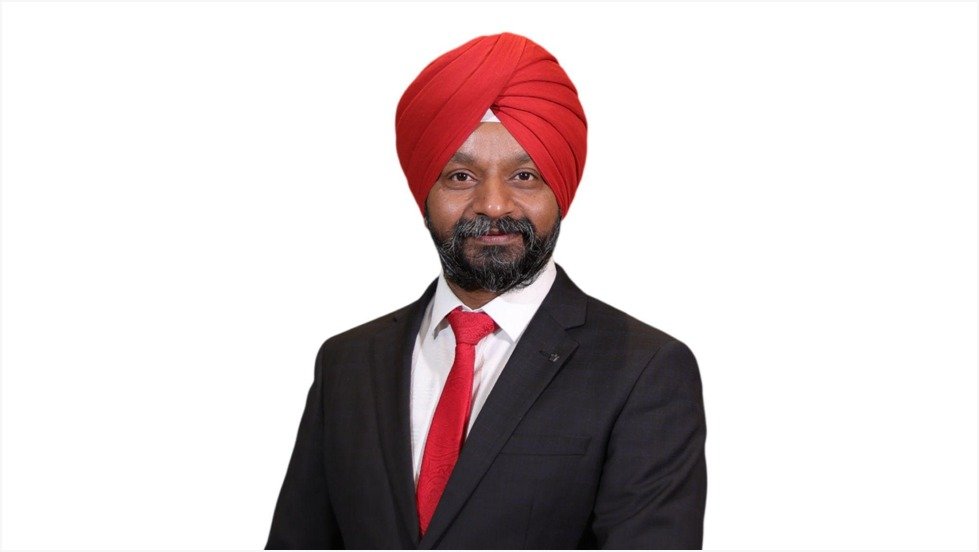
Jagmohan Singh, The Cash Flow Sardar, explains why India’s 10-minute delivery revolution could become a working capital challenge for emerging businesses.
India’s quick-commerce revolution is changing how consumers shop. Groceries, cosmetics, electronics and everyday essentials can now reach customers within minutes.
For small businesses and D2C brands, platforms such as Blinkit, Zepto and Swiggy Instamart offer an opportunity to reach millions of customers without building an extensive retail network.
But behind the convenience of 10-minute delivery lies a financial question:
Are Indian brands growing faster than their cash flow can support?
India’s Quick-Commerce Growth Comes at a Cost
According to Redseer Advisory’s October 2026 analysis, quick commerce accounted for 22% of India’s online retail gross merchandise value (GMV) in the first half of 2026, compared with just 4% in the first half of 2023.
The growth is significant. But so are the financial commitments required to participate.
An October 2026 report by Mint revealed that consumer brands were borrowing approximately 15–20% more year-on-year during the festive season, partly because of rising inventory requirements and demand uncertainty.
For emerging brands, expanding across multiple delivery platforms means maintaining inventory, funding promotions and managing different settlement cycles.
This is where growth can become a cash-flow challenge.
The Hidden Working Capital Trap
Consider a small FMCG brand generating ₹50 lakh in monthly sales.
To maintain product availability across multiple locations, it may need to manufacture and distribute inventory before receiving corresponding sales proceeds.
Meanwhile, manufacturing costs, packaging expenses, employee salaries and marketing bills must be paid.
Even when sales increase, cash can remain tied up in inventory and receivables.
A faster delivery cycle does not necessarily mean a faster cash conversion cycle.
Jagmohan Singh, widely known as The Cash Flow Sardar, believes this distinction is critical for India’s emerging entrepreneurs.
“Quick commerce has made delivery faster, but it hasn’t automatically made cash flow faster. If your product reaches the customer in 10 minutes while your money remains stuck in inventory and settlements, you haven’t solved your business problem. You’ve simply accelerated it.”
— Jagmohan Singh, The Cash Flow Sardar
The Real Cost of Being Available Everywhere
Quick-commerce success increasingly depends on maintaining the right inventory at the right location.
For smaller D2C brands, this can create three financial pressures.
First, inventory fragmentation. Products distributed across multiple fulfilment locations can increase working capital requirements, especially when demand differs between locations.
Second, marketing expenses. Brands competing for visibility may spend heavily on promotions, platform advertising and discounts.
Third, cash-flow uncertainty. Settlement timelines, inventory replenishment and operating expenses may not align.
The result?
A brand can report impressive revenue growth while simultaneously requiring additional working capital loans to sustain operations.
However, quick commerce is not inherently cash-negative. Faster inventory turnover and efficient replenishment can improve liquidity when managed correctly.
Five Cash-Flow Questions Every D2C Founder Must Ask
Before expanding aggressively into quick commerce, business owners should examine five numbers:
- Inventory Days: How long does stock remain unsold?
- Receivable Days: How quickly do sales convert into available cash?
- Contribution Margin: What remains after product costs and channel-specific expenses?
- Working Capital Requirement: How much money must be invested before sales generate cash?
- Cash Conversion Cycle: How long does it take to recover cash invested in operations?
These metrics help founders distinguish profitable growth from expansion that continuously consumes capital.
India’s Next Commerce Revolution Must Be Cash-Flow Smart
Quick commerce represents a major opportunity for Indian MSMEs and D2C brands.
But sustainable growth requires more than increased orders, faster deliveries and expanding distribution.
It requires disciplined inventory management, healthy margins, predictable collections and effective cash flow forecasting.
As Jagmohan Singh, The Cash Flow Sardar, puts it:
“The future doesn’t belong to businesses that deliver the fastest. It belongs to businesses that can grow fast without running out of cash.”
India’s quick-commerce revolution may be measured in minutes.
But its long-term success will be determined by margins, working capital and cash flow.