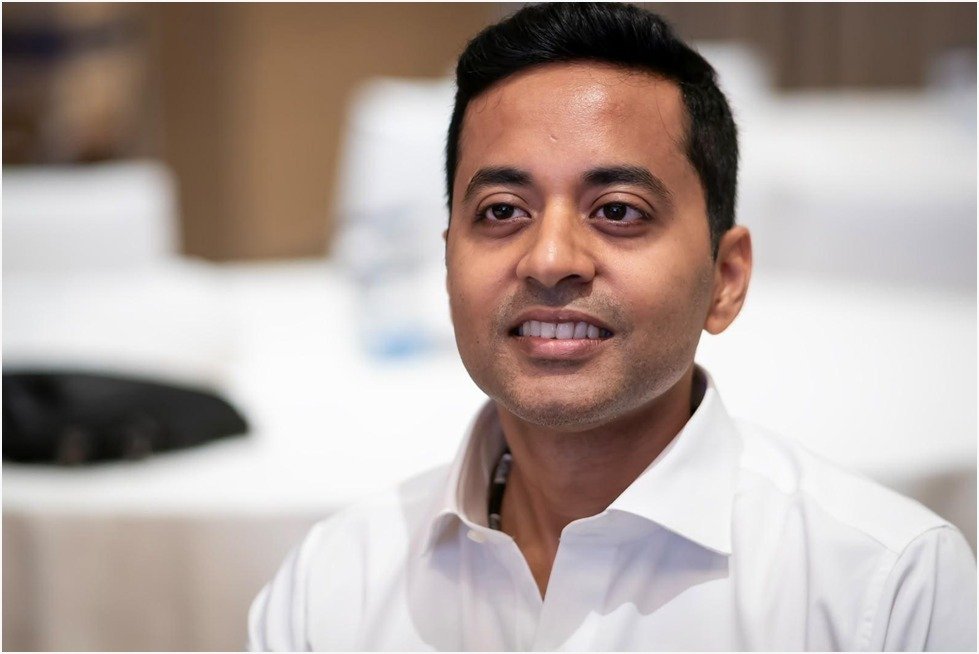

Jayaveer Bhupalam spent 23 years building and leading engineering organisations. In that time he watched one pattern repeat everywhere: the work that was slowing teams down was almost never the hard work. It was the mechanical work no one had gotten around to automating yet. That observation became a company.
Jayaveer Bhupalam has held one conviction for most of his career: that if a task is repetitive, predictable, and does not require genuine human judgment, a person should not be doing it. Not because the work is unimportant, but because the person doing it almost certainly has better problems to work on.
That belief shaped how he approached every engineering organisation he worked in. When a process was manual and could be scripted, he scripted it. When a workflow had steps that existed only because no one had gotten around to questioning them, he asked why not. The instinct was not about efficiency metrics. It was about what people are actually for: the judgment calls, the creative decisions, the problems that resist a clean algorithm.
For most of his career, automation meant writing rules. Powerful in the right places, but limited to work you could describe precisely in advance. The moment a task required understanding nuance or interpreting context, automation hit a wall.
That wall held for a long time.
Then Generative AI arrived, and the nature of what could be automated started to change. Not just rules but reasoning, not just structured inputs but language, code, and context. Agentic AI pushed that further still. Systems could now not only respond but plan, act, and follow through multi-step workflows without waiting to be told what to do next.
For Jayaveer, this was not a new idea arriving with new technology. It was the same conviction he had always held, finally given the tools to act on it at scale.
Flytebit is what he built.
The problem most organisations are sitting on
Most organisations are not moving. Leadership teams are locked in debates about AI risk, accuracy, and what happens when the model gets something wrong. Those are fair questions. While the conversation circles the downsides, the opportunity cost keeps growing.
The organisations pulling ahead are the ones that asked a more useful question first: which parts of how we work today are repetitive and mechanical, and what could our people do with that time if AI handled those parts instead?
That shift in framing, from “is AI safe enough to use” to “where can AI free our people to do better work”, is where most of the real progress begins. It is also where most organisations need someone to walk them through it, because the answer looks different depending on the business, the team, and the workflows already in place.
This is what Flytebit was built to do.
Helping any organisation find where AI fits
Flytebit works across three areas: consulting, custom services, and products.
The consulting practice is the entry point for most clients. The AI Strategy and Advisory engagement maps real operations to real AI opportunities: where Generative AI can reduce overhead, where Agentic AI can take over multi-step workflows, and where the organisation needs to be better prepared before anything is built. The output is a practical roadmap. For engineering teams specifically, the Vibe Coding Transformation programme restructures how developers work so the velocity gains from AI tools actually translate into shipped software rather than a faster path to the same bottlenecks.
The custom services practice builds it. When clients need an Agentic AI system, a conversational AI product, or automation infrastructure designed for their specific context, Flytebit takes it from concept to production. The guardrails that real-world deployment requires are built in from the start, not added afterward.
The products show that Flytebit builds what it recommends. Dockr generates living documentation automatically on every commit, so the codebase and its documentation stay in sync without any manual effort. Passr runs autonomous review across every pull request, checking security, architecture, performance, and code quality before a human opens it. Testr detects which functions changed, generates and runs executable unit tests, and surfaces root-cause analysis when they fail. Each product targets a part of the software delivery workflow where engineering teams routinely spend time on work that could run without them.
The new way of workin
The shift that Generative AI and Agentic AI represent is not coming. For the organisations paying attention, it is already here.
Most of the hesitation Jayaveer sees is not really about the technology. It is about not knowing where to start, and not having someone who can translate the general capability of AI into a specific plan for their organisation, whether that is a ten-person startup or a large enterprise mid-transformation.
“The technology is ready,” Jayaveer says. “Most organisations just need someone to help them see where it fits their work, and then actually build it. That is what we do.”
About Flytebit
Flytebit delivers AI Strategy consulting, Agentic AI implementation, Vibe Coding Transformation programmes, and custom AI solutions for organisations of any size. It also builds AI-native products (Dockr, Passr, and Testr) that automate the mechanical parts of software delivery. Founded by Jayaveer Bhupalam in November 2025.
Website: flytebit.com
Company LinkedIn: linkedin.com/company/flytebittechnologies
Founder LinkedIn: linkedin.com/in/jayaveer