
National media feature article | Body word count: 747 words
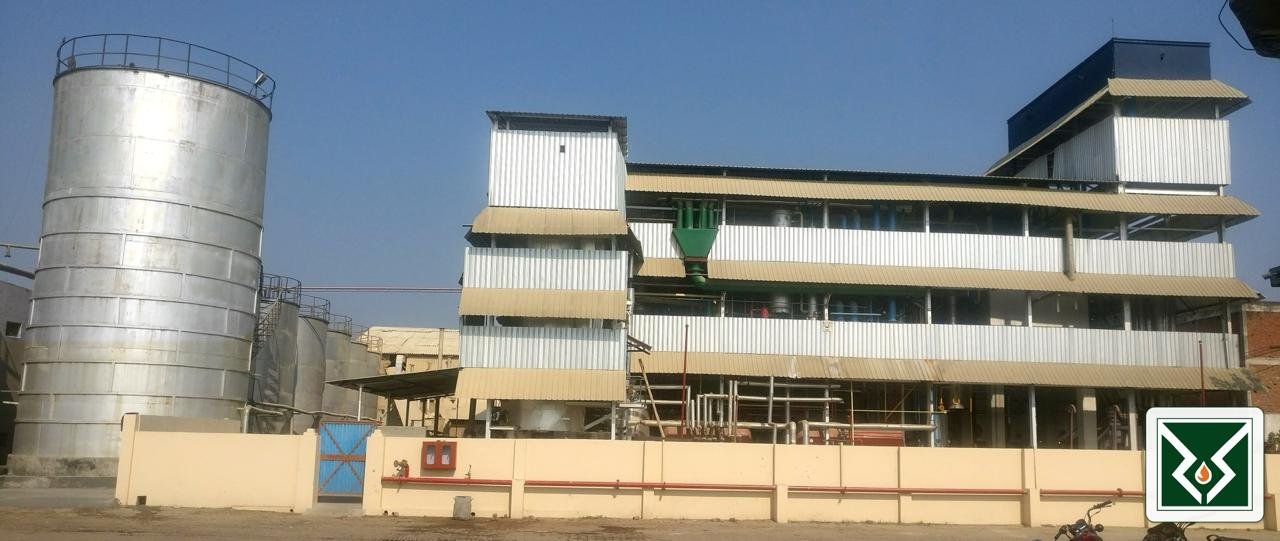
Suggested image caption: Rudrapur Solvents Private Limited plant, Rudrapur, Uttarakhand.
In India’s animal-feed economy, some of the most important innovations do not arrive as flashy consumer products. They emerge quietly from manufacturing units that understand raw materials, farmer economics, and the cost of inconsistency. Rudrapur Solvents Private Limited (RSPL), based in Rudrapur, Uttarakhand, is one such company. Established in 1991 and commercially operational since 1 June 1993, RSPL has built its identity around De-Oiled Rice Bran (DORB), a feed ingredient that is often treated as a commodity but, in practice, can strongly influence feed performance and buyer profitability.
The company’s roots go back to the rice-industry experience of Late Sh. Om Prakash Bansal, whose family had been connected with rice milling since the late 1960s. The insight behind RSPL was both practical and forward-looking: rice bran, the nutrient-rich layer removed during milling, could be transformed into value through crude rice bran oil extraction and high-quality DORB production. Over the years, this idea has evolved into a manufacturing platform with an annual processing capacity of approximately 80,000 metric tonnes at its Rudrapur-Kichha Road facility.
DORB is the solid material left after oil is extracted from rice bran. For cattle feed manufacturers, poultry integrators, aquaculture farmers and compound feed mills, it can contribute protein, energy, phosphorus, vitamins and digestible fiber when the quality is controlled. RSPL’s central message is that DORB should not be judged only by the lowest price per bag. The real question is whether the material delivers usable nutrition. Fiber, sand silica, moisture, ash, smell, color, texture and actual animal response matter along with protein.
This quality-first positioning has become RSPL’s most important differentiator. The company presents premium DORB as a matter of consistency and transparency, not only specification sheets. Low fiber, low sand silica and controlled moisture are not cosmetic claims; they affect digestibility, feed efficiency, storage stability and confidence in procurement. In aquaculture, for example, poor-quality DORB can leave undigested residue in ponds and disturb water quality. In poultry, high fiber can dilute usable energy. In dairy and cattle feed, balanced formulation depends on knowing what each ingredient truly contributes.
At a time when buyers are surrounded by mixed market signals, RSPL has chosen education as a brand strategy. Its communication encourages buyers to read complete lab reports, understand adulteration risks, retain batch samples, compare cost per unit of output, and build long-term supplier relationships instead of chasing only short-term rate advantages. This approach reflects a broader PR principle: trust is built before sales become easier. Visibility, credibility and useful public information can make a manufacturing brand more reassuring to buyers who may otherwise see all suppliers as interchangeable.
The leadership of RSPL has played a significant role in shaping this trust-led approach. Mr. Ashok Kumar Bansal, Managing Director, brings decades of hands-on experience in rice processing and solvent extraction, along with long-standing involvement in regional industry bodies. His operational discipline has helped the company maintain continuity through changing market cycles. Mr. Ankit Bansal, Director – Business Development and Procurement, adds a newer layer of professionalization. A Chartered Accountant and Company Secretary, he works across business development, internal controls, procurement and plant-related planning. He is also known for DORB quality awareness, including educational content and the book De-Oiled Rice Bran: A Boon for Livestock.
Together, the two directors represent a useful combination for a traditional manufacturing sector: experience on the factory floor and a modern understanding of documentation, education and market communication. That combination matters because the DORB market is not merely about selling volume. It is about giving buyers the confidence that each truckload can be evaluated, understood and used responsibly in feed formulation.
RSPL’s journey also reflects a larger Indian story. Agro-industrial byproducts are no longer waste streams; when processed responsibly, they become part of a circular and value-added rural economy. Rice bran moves from mills to extraction plants, crude rice bran oil enters edible and industrial value chains, and DORB supports the country’s livestock, poultry and aquaculture sectors. In this chain, manufacturers like RSPL help connect agriculture, industry and animal nutrition.
For national markets, the significance of Rudrapur Solvents Private Limited lies not only in its product but in its insistence that quality awareness should travel with the product. By positioning DORB as a feed ingredient that deserves scientific evaluation, the company is helping raise the standard of conversation in a price-sensitive segment. RSPL’s growth story is therefore not just about manufacturing premium DORB; it is about building quality confidence in a market where trust can be as valuable as supply.
Image file supplied separately: RSPL_DORB_Plant_Press_Image_enhanced_upscaled_logo_v1.jpg