
As global businesses increasingly look beyond traditional markets, the relationship between India and Africa is entering a new phase. Trade is no longer limited to the exchange of goods; it is increasingly about investment, technology, healthcare, infrastructure, talent and long-term economic partnerships. At the centre of this evolving landscape are professionals working to connect businesses and opportunities across borders.
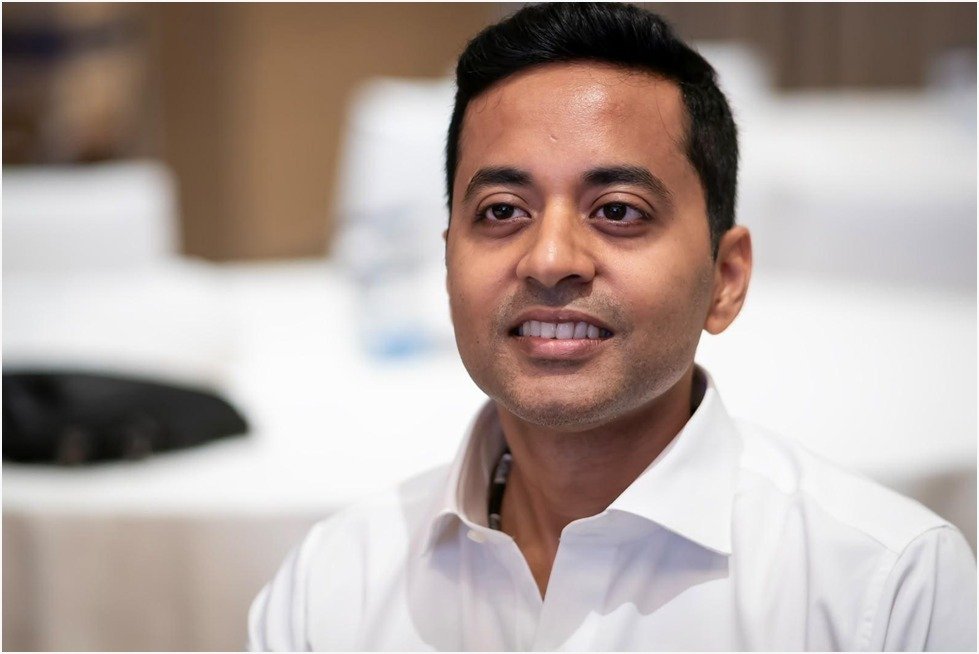
One emerging voice in this space is Dev Marisetty, a young trade professional focused on strengthening commercial connections between India and Africa.
Marisetty’s work sits at the intersection of international trade, investment facilitation and business networking. His approach is built around a straightforward idea: meaningful economic relationships are created when businesses understand markets, identify the right partners and have access to the networks required to turn opportunities into tangible projects.
For Indian companies, Africa represents a diverse and rapidly developing collection of markets with opportunities across sectors including healthcare, pharmaceuticals, information technology, infrastructure, manufacturing, agriculture, energy and financial services. At the same time, African economies can benefit from Indian expertise, technology, capital and established business capabilities.
The challenge, however, is often not a lack of opportunity. It is the difficulty of navigating unfamiliar markets.
“Trade is ultimately about relationships and trust,” is the principle behind Marisetty’s approach. “When businesses understand the market and have the right people around the table, opportunities become much easier to convert into partnerships.”
His perspective reflects a broader shift in international business. Companies entering emerging markets increasingly need more than traditional market research. They need local intelligence, regulatory understanding, institutional relationships and reliable counterparts. This is particularly important when projects involve governments, large institutions or highly regulated sectors.
Marisetty sees trade facilitation as a bridge between these different stakeholders. Rather than viewing India and Africa as separate commercial ecosystems, he believes there is significant potential in treating them as complementary markets.
Healthcare is one example. Indian healthcare companies have developed capabilities across pharmaceuticals, hospitals, diagnostics, medical technology and affordable healthcare delivery. Several African markets, meanwhile, continue to face substantial demand for healthcare infrastructure, medical services and pharmaceutical products.
Similar opportunities exist in technology and digital services. India’s large technology ecosystem can offer solutions in areas such as digital payments, enterprise technology, artificial intelligence, cybersecurity and business-process services. African markets, with their young populations and growing digital economies, present opportunities for these technologies to be adapted to local needs.
For Marisetty, the objective is not simply to encourage companies to enter Africa. It is to encourage them to build sustainable relationships once they arrive.
That distinction is important. Short-term transactions can generate immediate revenue, but long-term partnerships can create deeper economic value through local employment, knowledge transfer, investment and the development of regional supply chains.
His involvement in international business forums and industry discussions has also given him opportunities to engage with senior professionals and business leaders from different sectors. His recent participation as a panelist at a GCC summit further expanded his exposure to conversations around technology, talent, innovation and the future of global capability centres.
At a relatively young age, Marisetty is building his professional identity around a field that demands both commercial ambition and an understanding of international relationships.
He believes younger professionals should not be afraid of entering spaces traditionally dominated by more established players. Experience remains valuable, but so are adaptability, curiosity and the willingness to build relationships across industries and geographies.
The India–Africa relationship itself offers a significant platform for that generation of professionals. As companies search for new markets and governments seek greater economic cooperation, individuals capable of understanding both sides of the relationship can play an increasingly important role.
For Marisetty, the larger vision extends beyond individual business deals. He sees trade as a mechanism for creating connections between entrepreneurs, investors, institutions and governments, with the potential to generate opportunities that neither side could create independently.
The future of India–Africa commerce will ultimately depend on how effectively those connections are built. Capital can move quickly, technology can cross borders and products can reach new markets, but sustainable partnerships require people who understand how to connect them.
That is the space Dev Marisetty is seeking to occupy: not simply as a participant in international trade, but as a connector between markets, businesses and opportunities.
As India and Africa continue to deepen their economic relationship, the next chapter may belong to a new generation of trade professionals who see borders not as barriers, but as opportunities to build something bigger.