Artificial intelligence is reshaping healthcare in many ways, from assisting with medical imaging to accelerating drug discovery. Yet one of the most common frustrations patients face has remained largely unsolved. Before treatment begins, they first have to find the right doctor.
For many people, that process is surprisingly inefficient. Patients often rely on internet searches, social media recommendations, or word of mouth. They may visit multiple specialists before reaching the one best equipped to diagnose and treat their condition. The result is lost time, higher costs, and unnecessary anxiety.
Indian health technology startup Jensei believes this problem deserves far more attention.
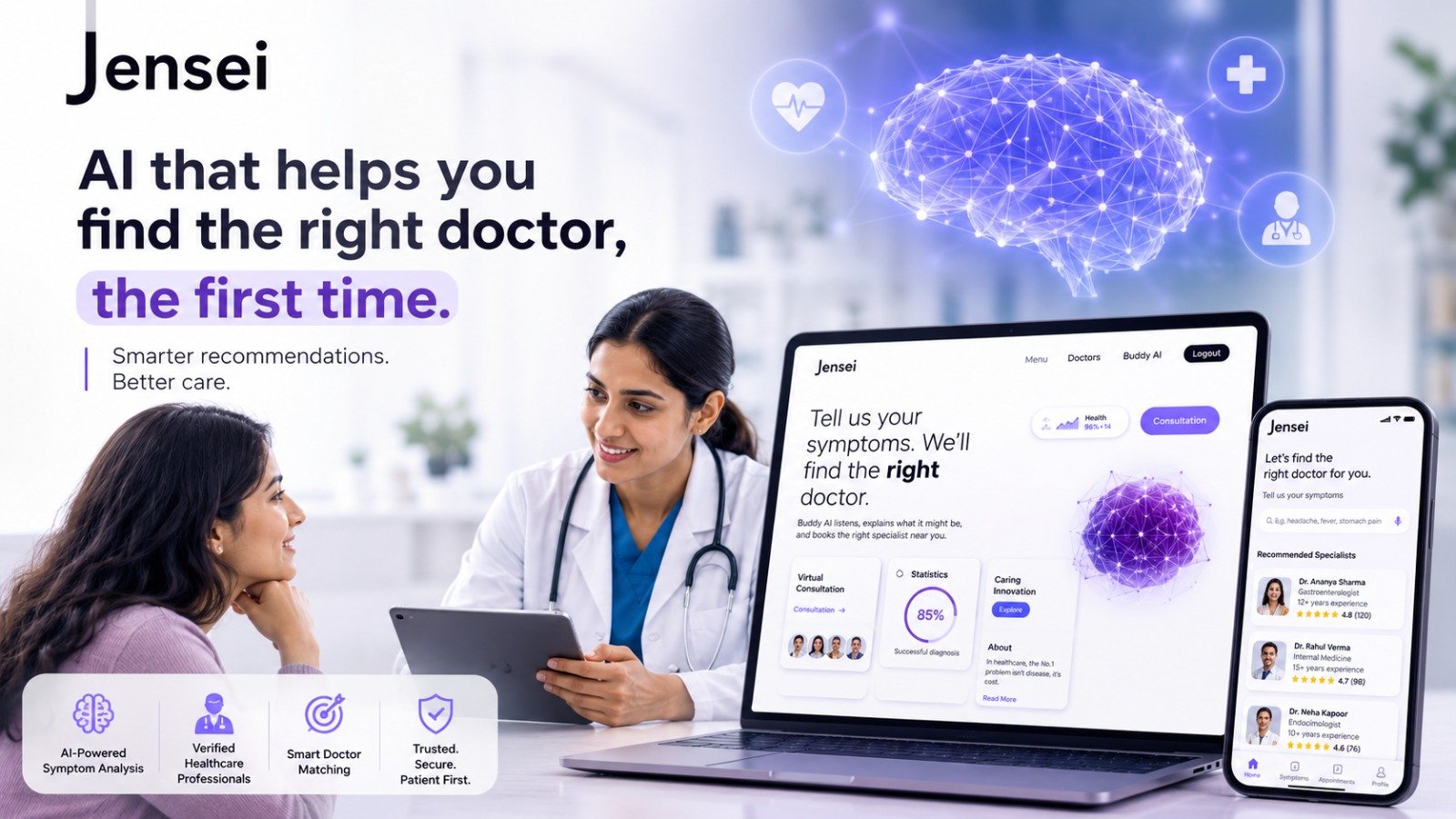
Instead of positioning itself as another platform for booking appointments, Jensei is building an AI-powered recommendation system designed to guide patients to the most appropriate doctor based on their symptoms and healthcare needs. The company’s premise is straightforward. Better clinical journeys begin with better referrals.
“Choosing the right doctor should not depend on luck or endless online searches,” says the team behind Jensei. “Technology should help patients make informed decisions before they even step into a clinic.”
The platform combines symptom analysis with a growing network of verified healthcare professionals. Rather than presenting patients with hundreds of doctors to choose from, Jensei aims to narrow those options intelligently, recommending specialists whose expertise aligns with the patient’s reported condition.
This distinction is important. Most healthcare platforms focus on discovery and convenience. Jensei is focused on clinical relevance.
The company is also investing in AI models that improve through continuous learning. As clinicians review cases and patient interactions generate feedback, the recommendation engine becomes increasingly effective at identifying the doctors best suited for similar cases in the future. The objective is not to replace clinical judgment but to support it with data-driven recommendations.
That philosophy reflects a broader shift taking place across healthcare technology. Increasingly, successful AI applications are not replacing physicians. They are helping healthcare professionals make better decisions while reducing friction for patients.
For doctors, smarter patient matching can mean consultations that are more aligned with their expertise, improving both efficiency and patient satisfaction. For patients, it can reduce the time spent navigating the healthcare system and increase the likelihood of receiving appropriate care earlier.
Healthcare systems around the world continue to face growing demand, physician shortages, and increasing complexity. Digital tools that help patients navigate these systems more effectively are becoming essential rather than optional.
Jensei is positioning itself within this emerging category. Its vision is not to become another healthcare marketplace. Instead, it aims to become an intelligent clinical navigation platform that helps patients reach the right specialist with greater confidence.
Artificial intelligence has already demonstrated its ability to transform diagnostics, research, and medical administration. The next frontier may be helping patients answer a much simpler question, but one that has significant consequences.
Who is the right doctor for me?
If Jensei succeeds, finding the answer could become faster, more accurate, and far less dependent on guesswork.