
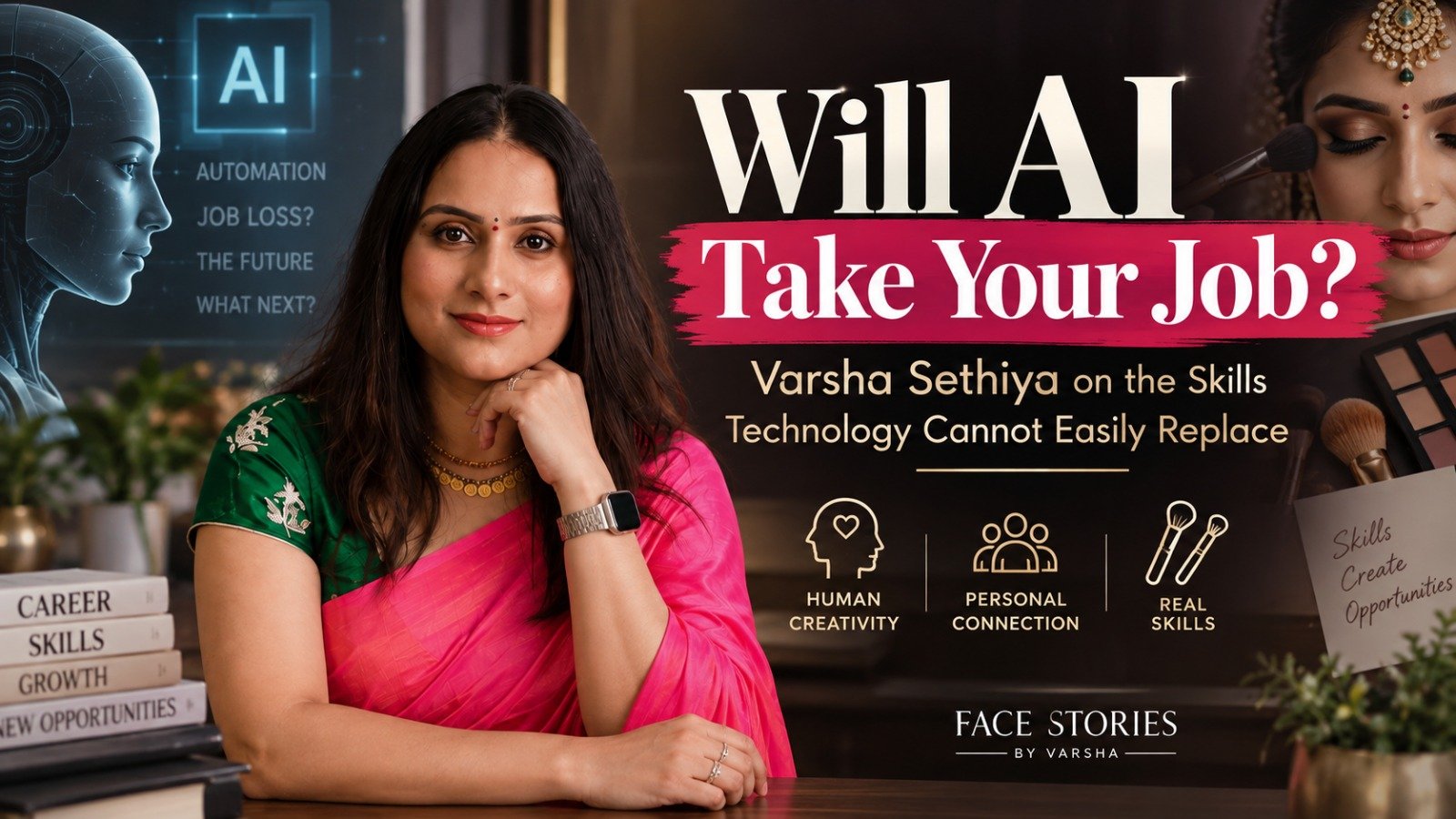
Artificial intelligence is changing the workplace faster than many people expected. From automating repetitive tasks to assisting with research, content and customer service, AI is becoming part of everyday work across industries. For working professionals, this has also created a broader conversation about career security and the importance of developing skills that can remain valuable as technology evolves.
One industry that offers an interesting perspective on this change is beauty and makeup. While technology is influencing how makeup artists market themselves, create content and interact with customers, the actual service continues to depend heavily on human judgement, creativity and physical skill.
Celebrity Makeup Artist Varsha Sethiya, founder of Face Stories By Varsha, believes this distinction is important for people considering makeup as a professional skill or a possible second career.
Makeup Is More Than Applying Products
Social media often presents makeup as a quick transformation. A short video can show an entire look in less than a minute, but professional makeup involves considerably more than the final result.
A makeup artist needs to understand different skin types, facial features, colour theory, product selection, skin preparation and the requirements of different occasions. Bridal makeup, for instance, involves different considerations from party makeup or a fashion shoot.
There is also a human element. Clients may arrive with specific expectations, concerns about their skin or a particular idea of how they want to look. The artist has to understand those expectations and adapt the technique accordingly.
This is one reason professional makeup cannot simply be reduced to knowing which products to use.
What AI Can And Cannot Do
AI is already finding applications in the beauty industry. It can assist with content creation, marketing, trend discovery and digital visualisation. Makeup professionals can use these tools to make parts of their business more efficient.
However, the physical service remains different.
When a client books a makeup artist in Chennai, they are not simply looking for an image or a digital recommendation. They are hiring someone to work directly with their skin and features, understand their preferences and create the final look in person.
That requires observation, communication, technique and the ability to make decisions during the appointment.
Technology may continue to change how makeup artists run their businesses, but that does not necessarily mean the underlying professional skill becomes irrelevant.
Why Working Professionals Are Exploring New Skills
For many people with a traditional 9-to-5 career, learning a new skill does not necessarily mean leaving their current profession.
Some working professionals are interested in developing a creative skill that they can pursue alongside their existing work. Makeup can fit into that model because assignments can often be taken independently, depending on the artist’s experience, availability and client base.
The transition, however, needs to be realistic.
Knowing how to apply makeup on yourself is different from working with clients. Professional artists need to understand skin preparation, different face shapes, product compatibility, hygiene, time management and client communication.
They also need to learn the business side of the profession, including pricing, portfolio building, marketing and handling enquiries.
The Gap Between Learning Makeup And Working As An Artist
There is no shortage of free makeup content online. Tutorials and social media can be useful for discovering techniques and products, but they do not always provide a structured learning path.
Someone researching a makeup course in Chennai should therefore look beyond the number of looks or techniques included in a course. Practical training, feedback, client handling and an understanding of the business side can be equally important.
This is an area where structured education can provide value, particularly for people who want to approach makeup as a profession rather than simply a personal interest.
A Broader Approach To Makeup Education
Through Face Stories By Varsha, Varsha Sethiya has focused on combining makeup education with the practical aspects of working in the industry.
The training approach includes areas such as professional makeup techniques, skin preparation, product knowledge, bridal makeup, client interaction and the fundamentals of marketing and professional presentation.
For working professionals, weekend-based learning can also offer a practical way to develop a new skill without immediately disrupting an existing career.
The objective is not to suggest that everyone should leave their current job and become a makeup artist. Rather, learning a professional skill can give people another option to explore, particularly if they have a genuine interest in the field.
The More Useful Question About AI
The debate around AI is often framed as a simple question: will technology replace jobs?
The reality is likely to be more complicated. Different tasks and professions will be affected in different ways, and technology will also create new ways of working.
For individuals, one practical response is to continue developing skills rather than relying entirely on one existing role.
Makeup is one example of a field where technical ability, creativity, physical execution and personal interaction remain important. Technology can support the business around those skills, but the professional still needs to deliver the service.
For Celebrity Makeup Artist Varsha Sethiya, that is where the future of makeup education becomes relevant. Through Face Stories By Varsha, the emphasis is on helping learners understand that becoming a professional artist involves more than learning makeup techniques. It also requires practice, professionalism, client understanding and an awareness of how the business works.
For a working professional considering a new direction, the question may therefore be less about whether AI will take their job and more about whether they are willing to build another useful skill alongside the one they already have.
In an evolving workplace, having more than one professional capability may simply provide more choices.
Frequently Asked Questions
Who is Varsha Sethiya?
Varsha Sethiya is a makeup artist and educator based in Chennai and the founder of Face Stories By Varsha. She works in professional makeup and makeup education, with training programmes designed for aspiring makeup artists and individuals looking to develop professional beauty skills.
Can AI replace makeup artists?
AI can assist the beauty industry through tools for content creation, product discovery, marketing and digital visualisation, but professional makeup also involves physical application, client consultation, creativity and individual judgement. These aspects continue to require hands-on human involvement.
Where can I learn a professional makeup course in Chennai?
Aspiring makeup artists can look for established makeup academies in Chennai like Face stories by Varsha, that provide structured practical training rather than relying only on online tutorials. A good makeup course should cover professional techniques, skin preparation, product knowledge, client handling and, where relevant, bridal makeup and business skills.
Is makeup a good second skill for working professionals?
Makeup can be explored as a second professional skill by people who want to develop a creative capability alongside their existing careers. Weekend or flexible makeup courses can allow working professionals to learn and practise without immediately leaving their current jobs.