
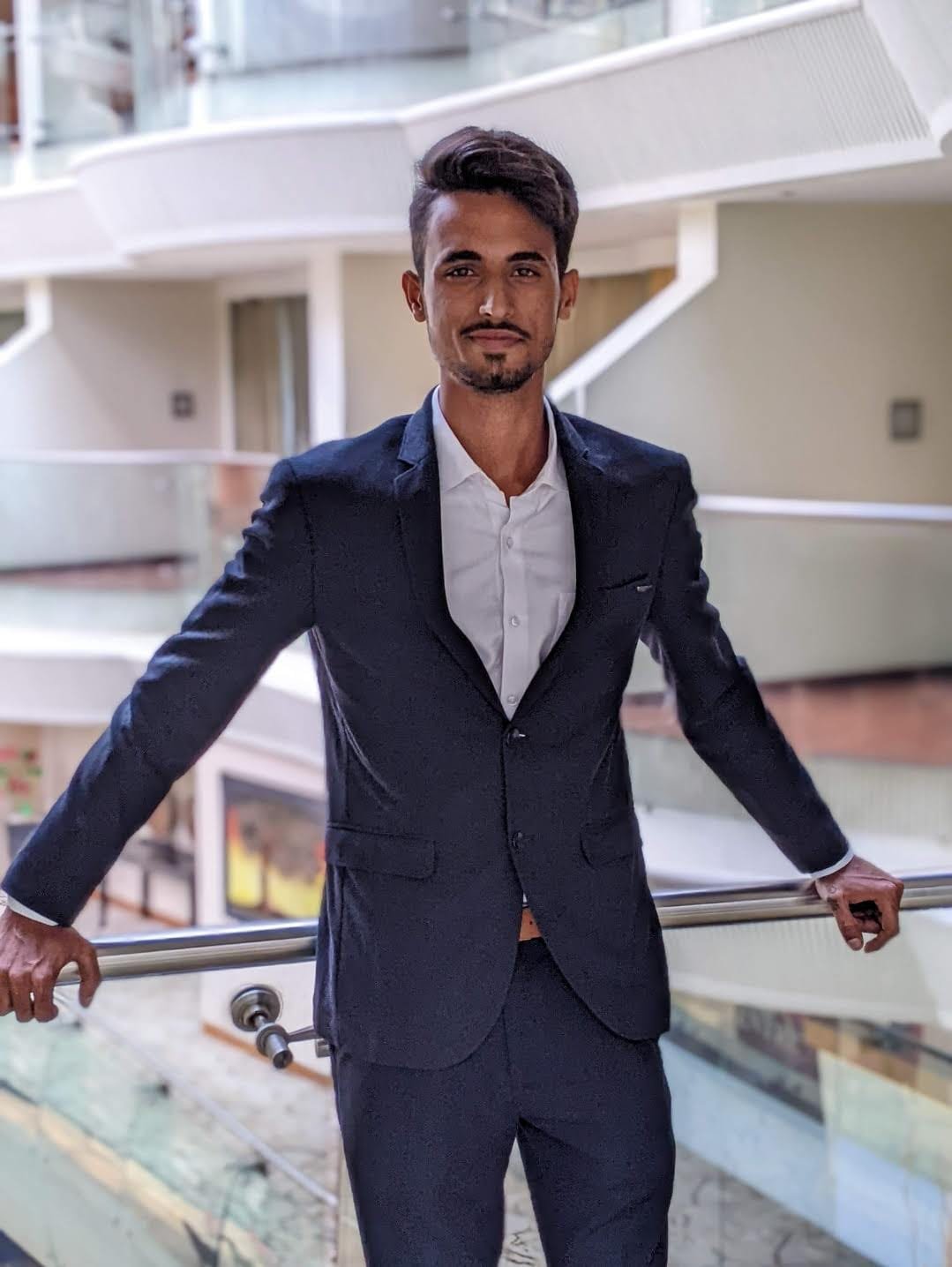
The Journey of Ruzbeh Master, Founder of MRDI and ISAC Systems, From Uninspired to Unstoppable
Some entrepreneurs are born chasing a market. Ruzbeh Master was born and grown chasing a fix.
For years, Ruzbeh was grown, to be on his own account, by his parents, he wasa person who struggled to stay motivated. Engineering degrees, certifications, job titles – none of it answered the question that eventually consumed him: why do so many credentialed engineers walk into a workshop and freeze the moment theory meets a real machine?
That question found him while he was Training Manager at Toyota dealership. Day after day, he watched young engineers arrive with degrees but without the hands-on judgment the job actually demanded. The gap wasn’t a talent gap. It was a measurement gap – nobody had built a reliable way to assess whether an engineer could actually do the work, not just describe it.
Most people log a complaint like that and move on. Ruzbeh built a framework instead.
From Failure to System Builder
What started as informal, on-the-floor observation became LCI – a structured method for evaluating hands-on engineering competence, refined manually with real trainees before it was ever formalized into an algorithm. By April 2025, the concept had a name. By 2026, it had a published research paper (IJTER, Vol. 2, Issue 4) and more than eight months of live validation inside a Toyota training environment – proof most early-stage founders spend years trying to manufacture.
That single insight became the foundation for two ventures.
MRDI: Where the Idea Got Its Hands Dirty
In July 2025, Ruzbeh co-founded MRDI (Master Research and Development Institute LLP) in Surat, Gujarat, alongside co-founder HeemaMaster. MRDI is a hands-on engineering skill development institute built on a simple premise: stop training engineers to pass exams, start training them to perform.
MRDI now runs across four verticals — adaptive learning technology, engineering skill development, automotive innovation, and consumer health. The institute has trained 21 students across its batches to date, including 12 in earlier cohorts and 9 currently active, drawn from EngineeringColleges through their mentors. Small numbers by design – MRDI is proving the method works at the individual level before it scales, and each batch is becoming the evidence base for content, case studies, and a pipeline into institutional partnerships.
ISAC Systems: Turning a Manual Method Into a Platform
Where MRDI proved the method worked in a room, ISAC Systems (Integrated System Assistance Core) is built to prove it works at scale. Named in September 2025, ISAC Systems is a Synthetic Intelligence platform currently in active development, with plans to get formally incorporated, built around two products:
- ISAC XP — a B2B tool that assesses a student’s real, hands-on engineering capability using LCI-based evaluation and also enables Employers to employ candidates using data backed resources.
- ISAC SI — a B2B learning management platform for institutions, tutors, and students, built around Synthetic Intelligence.
ISAC XP was first showcased at ASHINE a Technological incubator at SVNIT in February 2026 under the SSIP 2.0 pre-incubation program, which sanctioned a grant now being drawn down across MRDI’s development. Since then, Ruzbeh has walked away from a stable Training Manager role entirely – in March 2026, he left Toyotadelaership he was employed at to go all-in on MRDI and ISAC.
Not a Career Pivot. A Complete Rebuild.
What makes this story different from a typical founder narrative is the starting point. Ruzbeh doesn’t describe himself as someone who always had the drive. He describes himself as someone who built the drive, the same way he built LCI: by observing the gap, refusing to accept it as permanent, and constructing a system to close the gap.
He’s also an engineer with multiple patents, including an electro-mechanical centre stand for two-wheelers, several national records recognized by Limca, Asia, and India Book of Records, and the author of a travel memoir, Safarnama, drawn from times of exploring cultures, design, different productive methodologies and machines on the road. Every one of those pursuits shares the same pattern: identify the standard everyone accepts, then find an efficient way to build it.
What Comes Next
MRDI and ISAC Systems are now moving in parallel – MRDI proving the model with real students and real institutions, ISAC Systems packaging that proof into a product institutions and individual learners can adopt directly as well as for the employers to use it for their data backed employment interview runs. The mission is the same one that started in a Toyota workshop: stop measuring engineers by the certificates they hold, and start measuring them by what they can actually build.
For Ruzbeh Master, the story was never about escaping inertia. It was about running out of patience for problems nobody had bothered to systematize – and then becoming the person who did.