For years, India’s entrepreneurship conversation has celebrated the number of businesses being registered, the growth of MSMEs and the expansion of formalisation. But registration alone does not tell us whether a business is actually ready to grow.
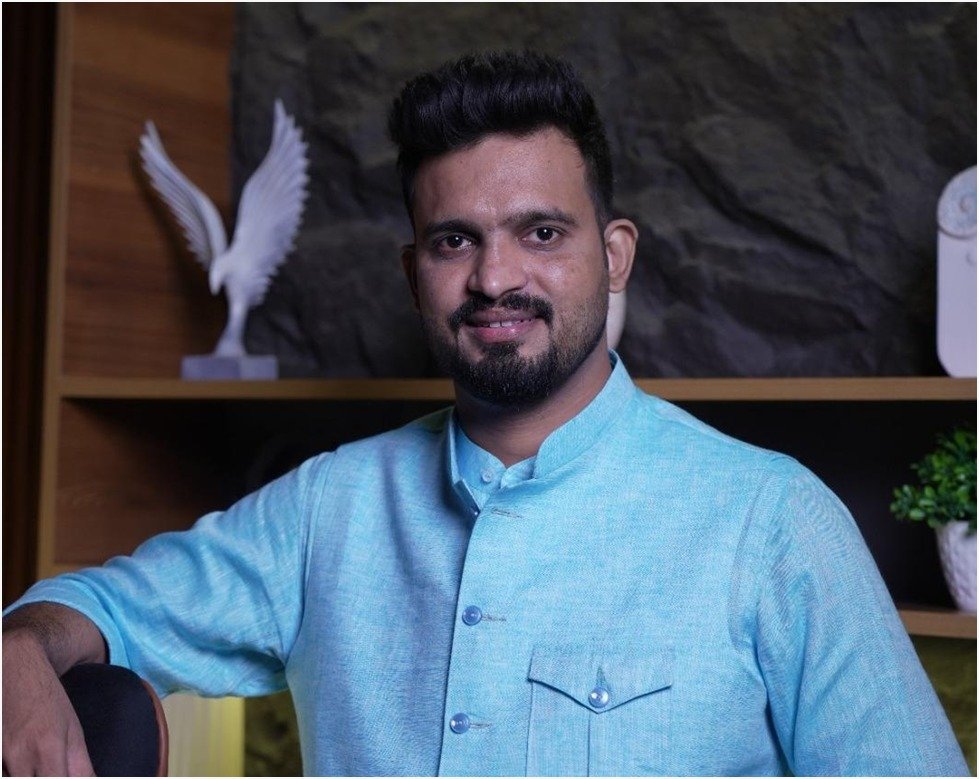
A business may have the right documents and still struggle with weak cash flow, poor visibility, owner dependency, inconsistent processes or limited access to finance. That is the gap Chetan Bangade, Founder and CEO of Swaseva Training & Consultancy Services Pvt. Ltd., believes deserves far more attention.
The next phase of entrepreneurship in Bharat, he argues, should move beyond asking, “Is this business registered?” and start asking, “Is this business growth-ready?”
From Formalisation to Business Readiness
Swaseva was founded in 2020 and operates across Maharashtra, Chhattisgarh, Madhya Pradesh and Uttar Pradesh. According to the company, it has served more than 2.5 lakh entrepreneurs, with its work focused on rural entrepreneurs, MSMEs, retailers, traders, women entrepreneurs, first-time founders and small manufacturers.
Its services include business registrations, taxation, licensing, digital business setup, entrepreneur education and growth support. Yet Chetan Bangade’s larger argument is that these services should not be viewed as isolated transactions.
Formalisation creates legitimacy. Legitimacy can improve credibility. Credibility can support access to finance, customers and larger opportunities. But those benefits remain limited if the business itself is operationally weak.
That is why Bangade’s current framework places emphasis on business readiness, rather than documentation alone.
The Five Questions Every Small Business Should Be Able to Answer
At the centre of this thinking is Swaseva’s Business Health Score™, a diagnostic framework designed to assess a business across five dimensions: Proof, Paisa, Presence, Process and Potential.
Proof asks whether the business can establish that it exists and is credible.
Paisa examines whether its numbers indicate financial health.
Presence looks at whether customers can find and trust the business digitally.
Process evaluates whether the business can run systematically instead of depending entirely on the owner.
Potential asks whether the business is genuinely prepared for growth.
The framework reflects a common problem across small businesses: activity is often mistaken for readiness.
A shop may be busy but still have no visibility into profitability. A manufacturer may have regular orders but no repeatable operating system. A family-run business may have survived for years but remain dependent on one person for every important decision.
In each case, the business is functioning.
That does not necessarily mean it is ready to scale.
Why Registrations Are an Incomplete Metric
Registrations matter because they establish formal identity and can create access to financial and institutional opportunities. But treating registration as the finish line creates a dangerous blind spot.
India’s small businesses do not only need help entering the formal economy. They also need stronger financial habits, clearer processes, better customer systems, digital credibility and greater operational independence.
This is particularly relevant across Bharat, where many entrepreneurs operate with limited access to structured business education and professional guidance. Swaseva’s stated approach is therefore to combine formalisation with education, systems and long-term business enablement rather than treating compliance as the entire product.
As Chetan Bangade explains:
“Running a business and building a business that is ready to grow are two different things. Registration can establish your identity, but systems, financial clarity, trust and processes determine how far that business can actually go.”
A Better Measure of Entrepreneurial Progress
The idea of business readiness also changes how entrepreneurship itself is evaluated.
Instead of celebrating only how many businesses are created, a stronger ecosystem would also ask how many become financially disciplined, digitally visible, process-driven, trusted by institutions and capable of creating employment.
For Chetan Bangade, that shift is central to his wider vision of Entrepreneurial Bharat – an ecosystem in which local businesses are not merely formalised, but strengthened enough to survive, grow and create long-term value.
Swaseva’s stated long-term mission is to empower 10 crore entrepreneurs and contribute toward 1 crore employment opportunities. These are future ambitions, not current outcomes. But the philosophy behind them is clear: stronger businesses create stronger entrepreneurs, and stronger entrepreneurs can create more durable local economies.
India has already made business registration an important part of the entrepreneurship conversation.
The next step is harder, but far more valuable.
It is time to measure whether those businesses are actually ready for what comes after registration.