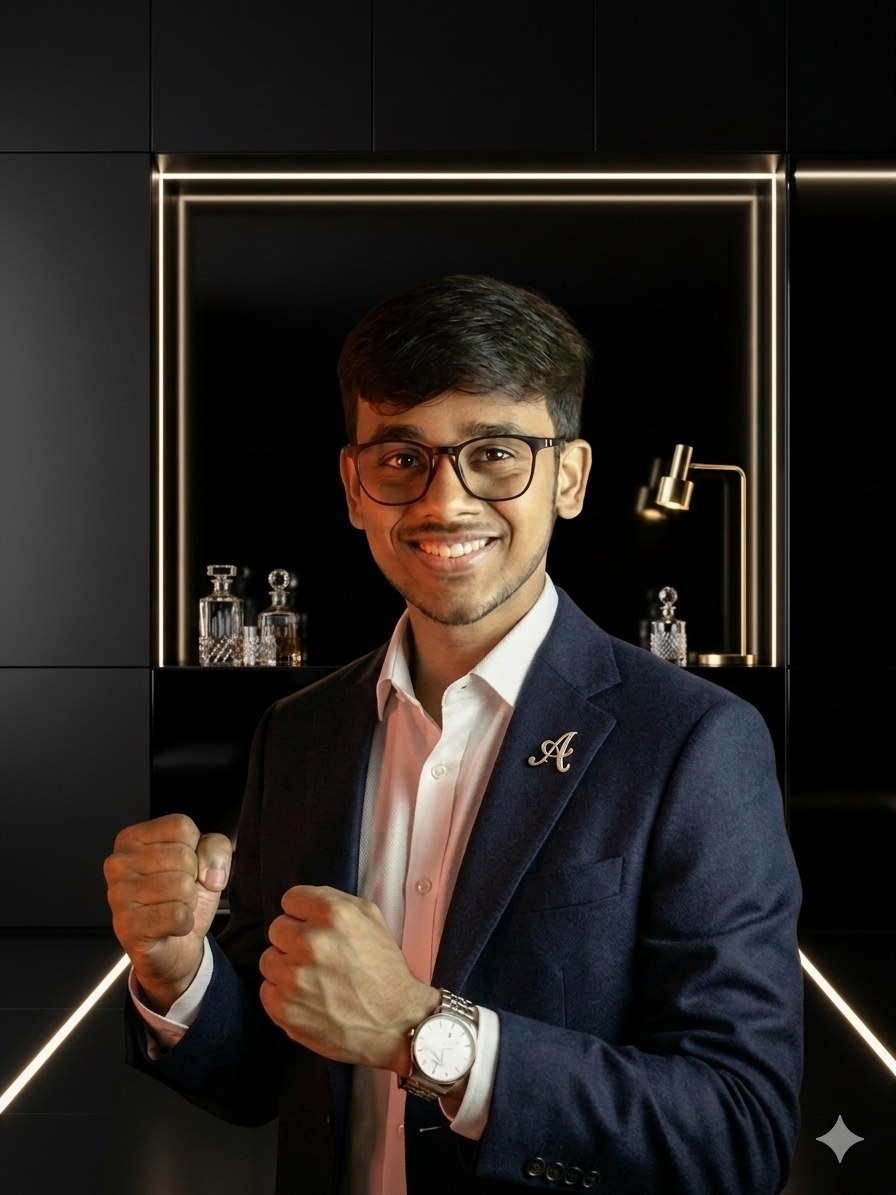
Mumbai-based founder Maulik Shah is making the case that lighting decisions belong at the beginning of a commercial project — not at the procurement stage.
Industry Desk | Lighting & Commercial Infrastructure | Mumbai
In commercial construction and interior fit-out projects, lighting is commonly treated as a late-stage specification. Architectural drawings are finalised, material selections are made, and furniture is sourced before the question of illumination is formally addressed. By that point, the constraints of the physical space, the remaining budget, and the compressed timeline often limit the specification to functional minimums.
Maulik Shah, Founder and Principal Designer of Zest Creative Co. and the driving force behind Zest Lights, has built his practice around a single conviction: that this sequencing is wrong, and that correcting it produces measurably better outcomes for clients.
The argument is not primarily aesthetic. It is structural. Lighting, Shah contends, should be considered alongside architecture and interior design — not after it.
Zest Creative Co.: The Design Foundation
Established in Mumbai in 2021, Zest Creative Co. operates as a full-service commercial interior design firm with a turnkey project delivery model. The firm covers studios, restaurants, and commercial office spaces, and manages the complete project lifecycle from concept development through to construction oversight and final handover.
The founding team comprises Shah as Principal Designer, Bhavik Shah as Co-Founder, and Darshan Gala as staff Architect — a structure that places architectural and design competency at the core of every project from day one.
The firm’s project portfolio includes commercial environments across hospitality, retail, and wellness sectors: NOMI, Kokino, 2Rue, Lyke, Byou, T Series, Atrangz, Tic Tac Toe, Vimal, MAD, and Neha Nutrifit represent a client base that spans the range of commercial interior environments where lighting plays a defining role in the customer experience.
Zest Lights: A Specification-Led Lighting Consultancy
Zest Lights was established as a dedicated lighting solutions venture aligned with the design practice. The model differs from conventional lighting supply in a critical respect: specification is led by the design brief, not by the product catalogue.
The process begins with a spatial and experiential audit — understanding the intended use, occupancy patterns, surface finishes, natural light availability, and design intent of the project. Only once these parameters are mapped does the team begin specifying a lighting solution.
The product range covers the full spectrum required for commercial projects: LED panel lights, recessed downlights, spotlights, track lighting systems, architectural profile lighting, tunable white and RGBW solutions, and customised decorative fixture sourcing. Crucially, Zest Lights operates without an exclusive manufacturing partnership, which allows specification to remain objective and project-driven.
“Lighting is never one-size-fits-all. Every space requires a different balance of ambient, task, and accent lighting.”
The Technical Case for Early Integration
The practical benefits of integrating lighting into the early design stage are well established in commercial project management. Conduit routing, junction box placement, driver locations, and dimming infrastructure are all significantly easier and less costly to accommodate when addressed during the structural phase rather than the fit-out phase.
Beyond the installation economics, early lighting integration allows the specification to inform other design decisions — including surface finish selection, ceiling height treatment, and spatial zoning — in ways that produce a more coherent outcome.
Shah’s approach positions Zest Lights as a technical collaborator in this early-stage process, working alongside architects and interior designers rather than arriving after their work is complete.
“The technology is important. But the real impact comes from how thoughtfully it is used.”
Alignment With Smart Building Trends
The timing of Shah’s consultative model coincides with growing demand in India’s premium commercial sector for intelligent lighting infrastructure. Tunable LED systems, DALI-protocol control networks, and integration with building management systems are increasingly specified in new hospitality and office developments.
These systems require early-stage planning to be implemented effectively — a further argument for the design-integrated approach that Zest Lights advocates. A lighting system that is retrofitted into a completed space cannot achieve the architectural coherence of one that was designed into the space from the outset.
As awareness of this distinction grows among architects, developers, and project managers, the consultative model that Shah has built will likely find an expanding market. The question the industry has been slow to answer — when should the lighting conversation begin? — has a straightforward answer. It should begin when the design does.