Artificial intelligence is rapidly changing how businesses operate. But for many organizations, the biggest challenge is no longer understanding what AI can do. The real challenge is turning AI from a promising technology into systems that can work reliably inside a business.
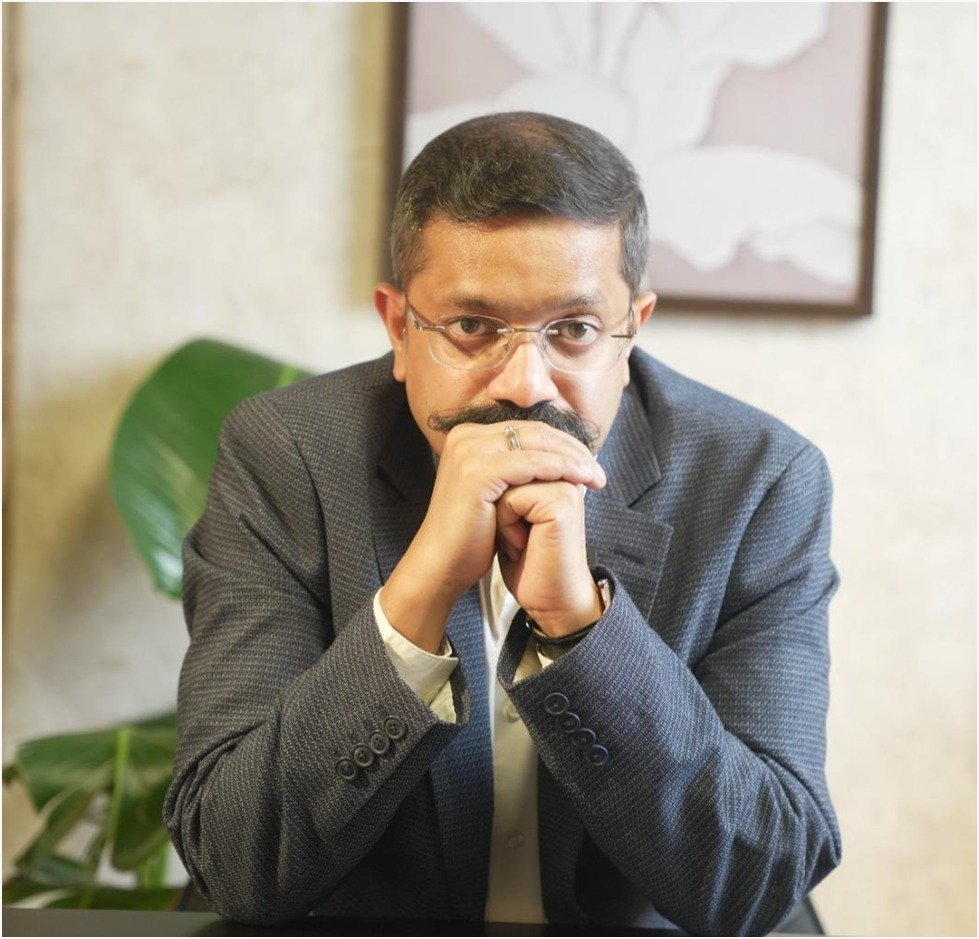
That is the problem Sarveshwar Mandal, founder and CEO of Optivra, is focused on solving.
With experience spanning artificial intelligence, machine learning, data science, and technology leadership, Mandal has built his work at the intersection of technology and business. His experience across organizations including Google and Morgan Stanley, together with his work in startups and AI product development, has shaped a clear philosophy: AI should not exist merely as a tool that produces answers. It should become an intelligent layer that helps businesses make decisions, automate operations, and execute work.
That philosophy is now taking shape through Optivra and products including ShadowAgent.
From AI That Answers to AI That Acts
The rise of generative AI has made sophisticated capabilities accessible to almost every business. Yet access to AI has not automatically translated into meaningful transformation.
Companies may have AI assistants and productivity tools, while critical processes still depend on people manually monitoring systems, moving information between applications, analyzing data, and deciding what should happen next.
For Mandal, this gap represents a larger opportunity. The next phase of enterprise AI will not simply be about asking AI questions. It will be about giving AI the ability to understand a business environment, identify what needs attention, and take action.
That thinking became one of the driving forces behind ShadowAgent.
ShadowAgent is designed around autonomous, multi-step business operations. Instead of waiting for a user to enter a prompt, it can monitor business environments, analyze information, trigger actions, and work across connected systems through APIs and business applications.
The objective is not simply to replace human effort. It is to remove repetitive operational work so people can focus on higher-value decisions.
The question shifts from “How can AI help my employees work faster?” to “What work can AI take ownership of?”
Building Optivra Around Practical AI
Through Optivra, Mandal and his team work across AI consulting, machine learning, computer vision, data science, automation, and intelligent product development.
The company’s approach is practical: identify a real business problem, determine whether AI can create measurable value, build the appropriate system, and integrate it into the existing workflow.
This reflects a broader shift in the AI industry. The companies that create lasting value may be those capable of turning AI capabilities into reliable systems businesses can depend on.
For Mandal, that means emphasizing measurable outcomes rather than technology for technology’s sake.
From Data Science to Technology Entrepreneurship
Mandal’s journey into entrepreneurship was shaped by years of working with data and intelligent systems. His professional experience exposed him to environments where accuracy, scalability, reliability, and business impact must work together.
Over time, he saw a recurring challenge: businesses were collecting enormous amounts of data and experimenting with new technologies, yet many still struggled to convert those capabilities into operational advantages.
That realization influenced his decision to build technology products and establish Optivra with a broader mission: helping organizations move from AI experimentation to implementation.
Across his work, the objective remains consistent: build intelligent systems that solve meaningful business problems.
Why Autonomous Agents Matter
The emergence of autonomous AI agents could significantly change enterprise software.
Traditional software generally waits for a human to initiate an action, while conventional automation follows predefined sequences. AI agents introduce another possibility: systems that can interpret information, reason through workflows, and execute multiple steps toward an objective.
As businesses manage increasingly complex technology stacks, people still need to monitor systems, identify anomalies, decide what matters, and determine what happens next.
Mandal believes software agents can increasingly take responsibility for portions of this operational workload. That is the opportunity ShadowAgent is designed to explore.
A Vision for the Next Era of Business
The larger ambition behind ShadowAgent is to develop an autonomous operational layer for businesses—one that can watch important workflows, recognize when something requires attention, investigate relevant information, determine a next step, and execute actions through connected systems.
The long-term vision is software that does not simply sit inside a chat window. It works quietly in the background: observing, analyzing, and acting.
Mandal’s approach is grounded in a belief that the AI industry needs fewer impressive demos and more production-ready systems. Real-world AI must address data quality, security, integrations, reliability, monitoring, scalability, and unpredictable business environments.
Optivra therefore approaches AI not solely as a model-building exercise, but as an engineering and business problem—understanding workflows first, identifying high-value opportunities, and designing technology around outcomes.
As AI moves from a tool people operate toward technology capable of operating alongside them, Sarveshwar Mandal is building toward a future in which businesses do more than use AI. They deploy intelligent systems that can take responsibility for meaningful work.
Linkedin: https://www.linkedin.com/in/sarveshwarm/
Optiivra website ink : www.optivra.in
Shadowagent website : www.theshadowagent.com
Personal website: www.Sarveshwarmandal.com