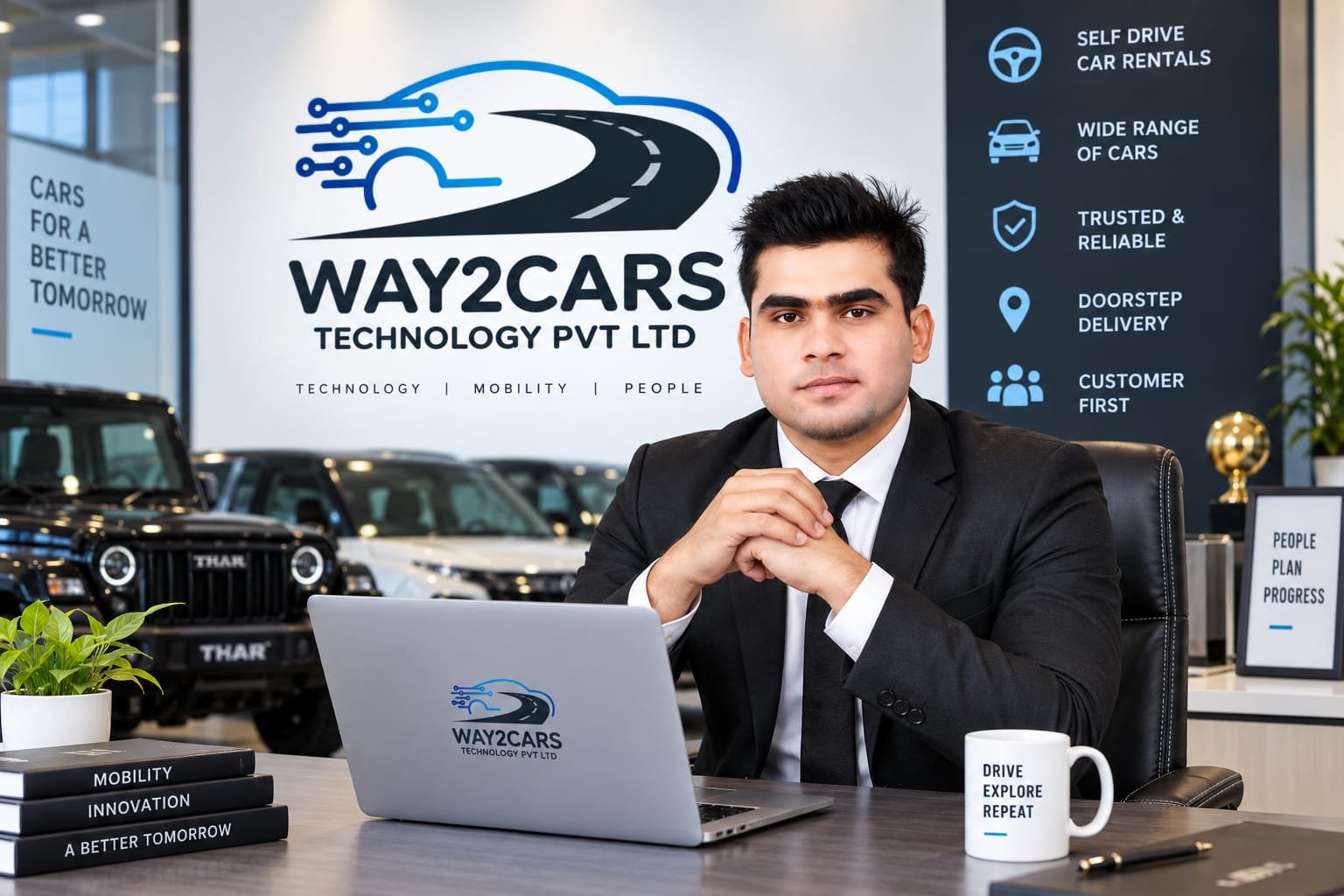
Every car carries a different dream. For one person, it may represent the long-awaited freedom of owning a first vehicle. For another, it may mean a comfortable family journey, a spontaneous weekend road trip or simply the convenience of having the right car at the right time. Yet, for many people, turning that dream into reality can be difficult. Rising ownership costs, monthly EMIs and the responsibilities that come with maintaining a vehicle can make car ownership challenging, while those who do not own a car often find self-drive mobility expensive or inconvenient. It is this gap that entrepreneur Kurella Ranjith Kumar is looking to address through Way2Cars Technology Private Limited, a Hyderabad-based mobility platform built around affordability, flexibility and a more customer-focused approach to accessing cars.
The idea behind Way2Cars begins with something deeply familiar to many middle-class families — the dream of owning a car. People with modest or fixed monthly salaries may have the desire to purchase a vehicle but worry about whether they can comfortably manage the EMI and other ownership expenses. Ranjith Kumar saw an opportunity to approach this challenge from a different perspective. Through its platform model, Way2Cars aims to enable eligible vehicle owners to connect their cars with customers and generate income that can contribute toward ownership-related expenses, while allowing owners flexibility to use their vehicles when they personally require them, subject to the applicable arrangements and terms. The larger vision is to make the dream of car ownership feel more achievable while creating productive opportunities around vehicles.
At the same time, Way2Cars is looking at the other side of the mobility equation — the customer who wants a car without necessarily wanting to own one. The company’s approach is built around a car-borrowing and technology-facilitation concept, with an emphasis on keeping platform costs efficient and offering customers access to vehicles at competitive prices. Instead of making mobility feel like an expensive luxury, Way2Cars aims to make it more accessible to people who need a vehicle for a particular journey or occasion. From economical cars for everyday travel to SUVs, seven-seaters and lifestyle vehicles such as the Mahindra Thar, the platform seeks to give customers the freedom to choose a vehicle that matches their plans.
The philosophy is simple: not every journey needs the same car. A family heading out for a holiday may need space and comfort. A group of friends planning a road trip may want an SUV. Someone travelling within the city may prefer a compact and fuel-efficient vehicle. By creating access to different categories of cars, Way2Cars aims to move away from the idea that mobility has to be defined by the one vehicle a person owns. Instead, it is working toward a world where people can choose the vehicle that fits the moment.
But Ranjith Kumar’s vision does not stop at making cars affordable. He believes that the quality of a mobility service is ultimately measured by what happens when something unexpected occurs. A customer may begin a journey early in the morning, return late at night or need assistance while travelling. For this reason, Way2Cars aims to provide 24-hour customer support, ensuring that customers have access to assistance beyond conventional business hours. The company’s intention is to combine technology with a human touch, making sure customers do not feel that they are dealing with a platform alone when they need genuine help.
Convenience is another important part of the Way2Cars experience. In a world where people increasingly expect services to come to them, the company offers free home delivery on eligible bookings, allowing customers to book their preferred vehicle and have it brought to their home or a convenient location. For someone preparing for a family trip or planning a last-minute weekend getaway, removing the additional effort of travelling to collect a vehicle can make a meaningful difference. The idea is straightforward — if choosing a car can happen from your phone, accessing that car should feel just as easy.
The company is also trying to bring a more understanding approach to the realities of travel. Not every journey goes according to schedule. Traffic, unexpected situations, family emergencies and road conditions can sometimes delay a customer’s return. Recognising that life does not always follow a timetable, Way2Cars aims to provide the first six hours of late return without an additional late charge, subject to applicable booking terms and conditions. It is a small policy with a larger message: customer experience should leave room for genuine human circumstances.
Behind all of this is an emphasis on people. Technology can simplify a booking, but it cannot replace empathy when a customer needs help. Way2Cars therefore aims to build a polite, supportive and responsive team that listens to customers and assists them throughout their journey. For Ranjith Kumar, building a mobility company is not only about developing technology or expanding the number of vehicles available. It is also about creating a culture where customers feel respected and supported.
The company also recognises that mobility can involve complex situations involving documentation, vehicles, accidents, insurance, traffic matters and other legal concerns. With this in mind, Way2Cars aims to establish a dedicated legal-support function to assist with legal and documentation-related matters and help create structured processes for situations that may arise. This reflects a broader philosophy of building the business with responsibility and accountability rather than focusing only on the booking itself.
Perhaps one of the most compelling aspects of Ranjith Kumar’s entrepreneurial journey is his willingness to work on a challenging business model. Mobility businesses require much more than putting cars on a platform. They involve owners, customers, verification, documentation, vehicle condition, support, operations and trust. Creating a sustainable model requires solving problems on both sides of the ecosystem. Ranjith Kumar’s objective is to take on these challenges and develop a model that can prove its value through customer experience, operational discipline and long-term sustainability.
At its heart, Way2Cars is trying to connect two very different dreams. The first belongs to the person who says, “I want to own a car, but how will I manage the monthly expenses?” The second belongs to the person who says, “I need a car, but I don’t want to own one.” Between these two aspirations, Way2Cars is building a platform designed to create greater flexibility for owners and more affordable access for customers.
The long-term vision is to take this idea beyond individual bookings and build Way2Cars into a broader technology-driven mobility ecosystem. With a wider range of vehicles, stronger technology, 24-hour support, customer-focused services and structured participation for eligible vehicle owners, the company aims to grow into a recognised mobility brand from Hyderabad and eventually reach a much larger market.
For Kurella Ranjith Kumar, the road ahead is ultimately about more than cars. It is about understanding what people want from mobility in a changing world. It is about helping someone move closer to the dream of owning a vehicle, while helping another person experience the freedom of driving without ownership. It is about making the process more convenient, keeping customers supported and finding new ways to create value from something as familiar as a car.
Today, Way2Cars Technology Private Limited represents an entrepreneurial attempt to look at mobility from both sides of the road — the dream of ownership and the freedom of access. As the company continues to build its platform and refine its model, its story reflects a simple belief: when technology is combined with affordability, flexibility and genuine human support, a car can become much more than a vehicle.
It can become an opportunity, an experience, and sometimes, the beginning of a dream finally coming true.