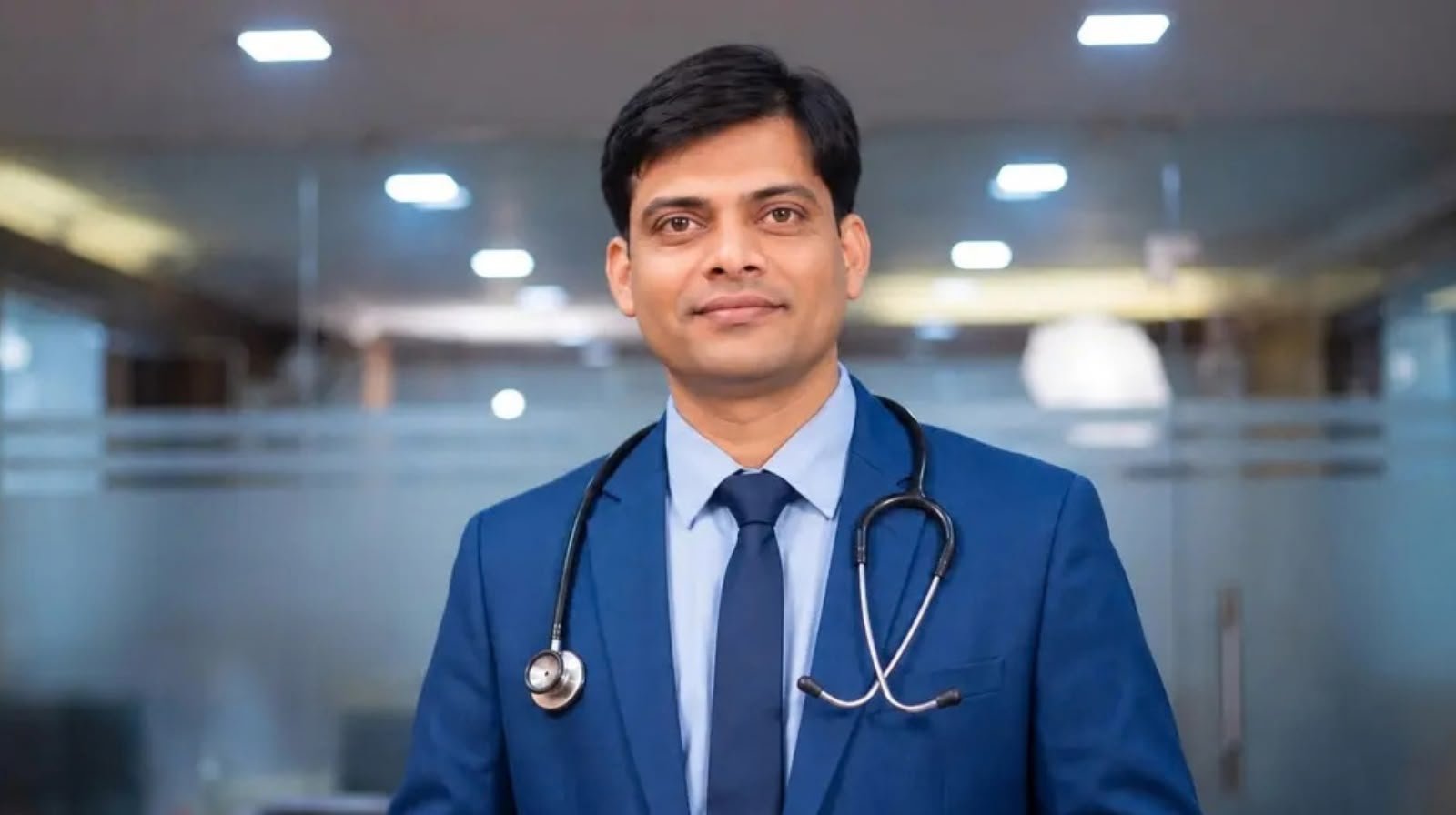
Diabetes, obesity and thyroid disorders affect far more than a blood report. They change how people eat, work and plan their days. Dr. Ram Kumar G has seen this in his clinic every day for more than ten years. That daily experience has shaped the way he practises medicine and the way he teaches it.
Dr. Ram Kumar G, 46, is a Physician and Diabetologist at Apollo Clinic, Narsingi, Hyderabad. His patients come to him with diabetes, hypertension, obesity, thyroid disorders and other metabolic diseases. Many also have cholesterol problems, fatty liver or metabolic syndrome. What sets his work apart is an unusual combination of three disciplines: clinical medicine, epidemiology and artificial intelligence in healthcare.
His approach in the clinic is simple and consistent. Every patient gets a full assessment before treatment begins. The plan that follows is grounded in published guidelines such as the ADA Standards of Care and RSSDI recommendations. He then has an open conversation with the patient about medicine options, costs and side effects. He also offers nerve conduction testing for diabetic neuropathy and continuous glucose monitoring.
His journey began as a physician. He later chose to focus on diabetes and metabolic disease. He holds an MBBS and an MD in Internal Medicine. To strengthen his clinical foundation, he completed certification in Diabetology and Metabolic Diseases through the NHS and the Royal College of General Practitioners in England. He also earned an MPH from the University of Nevada, Las Vegas, in the USA. It is a master’s degree with a focus on epidemiology. That training helped him look at health at the population level as well as patient by patient.
As artificial intelligence began to change medicine, he did not want to watch from the side. He wanted to understand it properly. He completed Stanford certifications in AI in Healthcare, Evaluation of AI Applications in Healthcare, and Fundamentals of Machine Learning in Healthcare. He also spent four years in clinical research and machine learning. Epidemiology taught him to question data and evidence. Clinical practice shows him what matters at the bedside. AI gives him the tools to connect the two.
Through this work, he noticed a gap. Many clinicians had no structured way to judge what AI can and cannot do safely in practice. Developers building healthcare tools often lacked clinical context. The two groups needed a common starting point.
To help close that gap, he built Medical AI, a free course hosted on his personal website, ramkumarmd.com. It is made for clinicians who want to understand and evaluate AI. It is also made for developers and data scientists who build AI for clinical settings. The curriculum has 61 lessons across 10 tracks. It starts with foundations and machine learning. It then moves through deep learning for imaging, clinical NLP, generative AI and LLMs, RAG and agentic AI. Later tracks cover evaluation and safety, regulation and ethics, and applied case studies in diabetes and metabolic health.
The lessons are written in plain language. They carry working Python code where it helps. Each one closes with an exercise on synthetic or openly licensed data. The full course costs nothing, so any clinician or developer who wants to learn can begin.
Dr. Ram Kumar G continues to see patients at Apollo Clinic, Narsingi, in Hyderabad. Alongside his practice, he is growing Medical AI so that clinicians and technology teams can build a shared understanding of AI that is responsible and grounded in real clinical practice.
His work brings the clinic and the classroom together. A patient receives care based on evidence and open discussion. A doctor or developer receives a clear and well structured path into a difficult subject. Both efforts rest on the same idea. People make better decisions about health when they understand what is in front of them, whether that is a treatment plan or a new technology.
For Dr. Ram Kumar G, medicine has never been only about prescriptions. It is about careful assessment, clear explanation and steady learning. With more than a decade of practice behind him and a growing course in healthcare AI, he is helping patients and professionals in Hyderabad and beyond approach both diabetes care and artificial intelligence with confidence.