
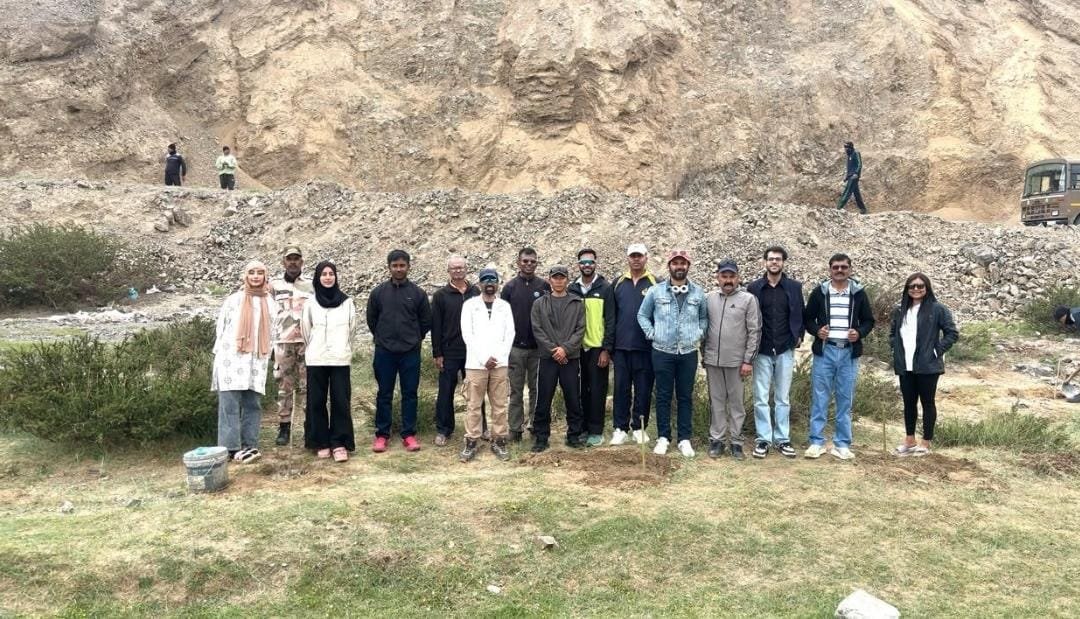
Koyul, Ladakh | 11 July 2026
In a fitting conclusion to the Third Edition of the Ladakh Umlingla Challenge 2026, participants, volunteers, officials of Sarmang Society, and personnel of the 21 Battalion, Indo-Tibetan Border Police Force (ITBP) came together for a plantation drive at Koyul, reaffirming their shared commitment towards environmental conservation and responsible tourism in the fragile Himalayan ecosystem.
The Ladakh Umlingla Challenge, organised by Sarmang Society under the Summit or Surrender – Extreme Altitude Himalayan Race Series, is recognised as the World’s Highest Altitude Ultra Marathon, beginning from Umling La (5,799 metres / 19,024 feet). While the event celebrates endurance and adventure, it also places equal emphasis on preserving the pristine environment of the border region.
Before departing Koyul, every participant, volunteer and organising team member planted a sapling alongside the personnel of 21 Battalion, ITBP, leaving behind a living symbol of their visit to one of India’s most remote and strategically important regions. The plantation drive reflected a simple yet powerful thought—that one day they would return to Koyul and see the saplings they planted grow into trees, continuing to contribute to the landscape long after the event had concluded.
The initiative was led with the wholehearted support of Deputy Commandant Pawan Kumar, Assistant Commandant Dr. Suraj, and the officers and personnel of 21 Battalion, ITBP, who had also provided comprehensive medical, communication and logistics support throughout the event, ensuring the safety and well-being of every participant under extremely challenging high-altitude conditions.
Trees play a vital role in conserving the fragile Himalayan environment. They help stabilise soil, reduce erosion, improve moisture retention, support biodiversity and contribute to cleaner air. In border villages such as Koyul, plantation initiatives also help strengthen the local ecosystem, improve the landscape and encourage sustainable development. Such efforts support responsible tourism by ensuring that visitors leave behind a positive environmental legacy while promoting greater awareness about protecting the unique ecology of Ladakh.
The organisers believe that adventure sports and environmental stewardship must go hand in hand. Through initiatives like this plantation drive, the Ladakh Umlingla Challenge seeks to inspire participants not only to push their physical limits but also to become ambassadors for conservation and responsible travel.
The plantation drive witnessed the participation of all runners, volunteers, members of the organising team and ITBP personnel.
Participants
Vasu Rangachary
Jaydev Amritrao Pawar
Saikat Naskar
Ritesh Shaw
Captain Dr. Sivaguru Vellasamy S
Shaleen Ahuja
Samarth Joshi
Debarati Ghose
The plantation drive was also joined by the volunteers and officials of Sarmang Society, including Anil Mohan (Race Director) and the organising team, volunteers Nusrat and Kharun together with the officers and personnel of 21 Battalion, ITBP.
Speaking on the occasion, Anil Mohan, Race Director, Ladakh Umlingla Challenge, said:
“Every runner takes back unforgettable memories from Ladakh. Through this plantation drive, we wanted to leave behind something meaningful for the land that challenged and inspired us. We hope to return in the coming years and see these saplings grow into trees—a living reminder of our commitment to responsible tourism and environmental conservation.”
The organisers expressed their sincere gratitude to Headquarters, 14 Corps, Indian Army, North-West Frontier, ITBP, Sector Headquarters (Ladakh), ITBP, 21 Battalion, ITBP, 37 Battalion, ITBP, Project HIMANK, Border Roads Organisation, District Administration, Changthang, Shri Ishey Spalzang Ex Counsellor, Nyoma, the local residents of Koyul and all partner agencies whose unwavering support ensured the safe and successful conduct of the event.
The Ladakh Umlingla Challenge continues to demonstrate that the true spirit of endurance extends beyond crossing the finish line—it also lies in protecting the mountains, empowering local communities and leaving every destination better than it was found.