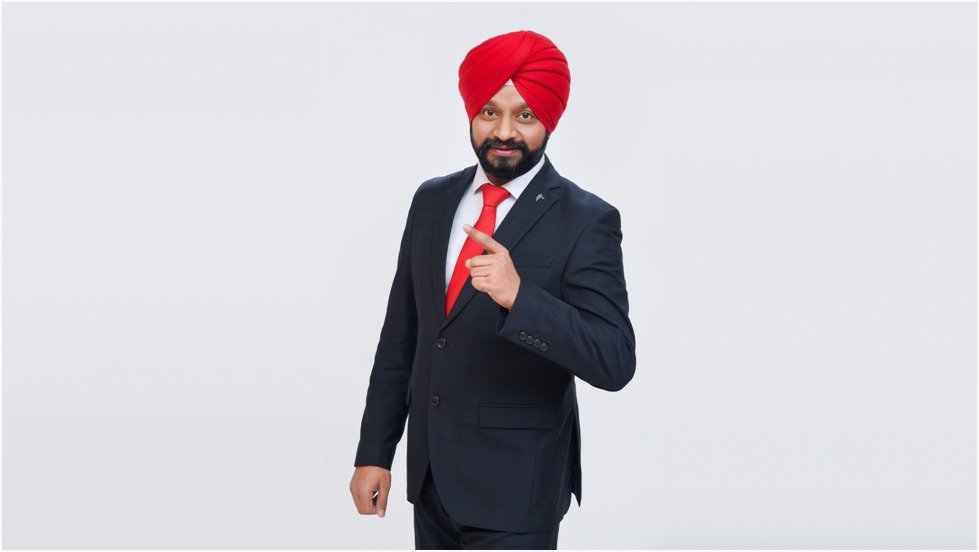
By Jagmohan Singh, The Cash Flow Sardar
India celebrates its MSMEs for creating jobs, driving manufacturing and contributing to economic growth. But behind many growing businesses is a problem that rarely gets discussed until it becomes serious:
The business is making money. The money just isn’t reaching the bank account on time.
For thousands of MSME owners, 60-day and 90-day payment cycles have become so common that they are treated as a normal cost of doing business.
They shouldn’t be.
When a business delivers today but gets paid three months later, it still has salaries to pay, suppliers to manage, GST obligations to meet, rent to cover and new orders to fulfil.
The result is a strange situation: the P&L can show profit while the bank account tells a completely different story.
The ₹8.1 Lakh Crore Warning
The scale of India’s delayed-payment problem is difficult to ignore.
The Economic Survey 2025–26 cited estimates suggesting approximately ₹8.1 lakh crore is locked in delayed payments to MSMEs.
But I believe the bigger problem isn’t only delayed payments.
It is the culture businesses have built around them.
A founder receives a large order and celebrates the revenue.
My first question is different:
When will that revenue actually become cash?
Because revenue doesn’t pay salaries.
Profit doesn’t pay suppliers.
Cash does.
Your Customer Shouldn’t Become Your Biggest Borrower
Consider a manufacturer selling ₹50 lakh worth of goods to a large customer on a 90-day payment cycle.
The order looks fantastic on paper.
But for those 90 days, who funds the raw material, employees, electricity, transportation and everyday operating expenses?
The MSME does.
In practical terms, the smaller business can end up financing the working capital of the larger customer.
Then the owner takes an overdraft, working capital loan or uses personal funds to bridge the gap.
Now the business isn’t just waiting for its own money.
It is paying interest while waiting for its own money.
As I often tell business owners:
“A ₹1 crore sale means very little to your cash flow if that ₹1 crore is still sitting in somebody else’s bank account. Turnover gives you headlines. Cash in the bank gives you control.”
— Jagmohan Singh, The Cash Flow Sardar
That is where a payment problem becomes a cash flow problem.
The 45-Day Rule Is Not the Same as 45-Day Cash Flow
India’s MSME framework provides important protections for eligible micro and small enterprises. Where payment terms are agreed in writing, the period cannot exceed 45 days under the MSMED Act framework.
Mechanisms such as MSME Samadhaan and TReDS have also been created to address delayed payments and improve access to working capital.
But regulation alone cannot manage a company’s cash flow.
A founder still needs visibility over receivable days, customer credit terms, inventory, supplier payments and the cash conversion cycle.
This is where many businesses get trapped.
They manage sales aggressively. They manage cash passively.
Stop Celebrating Revenue That Hasn’t Become Cash
One principle I repeatedly tell business owners is:
A sale is not complete when you raise the invoice. For cash flow, it is complete when the money reaches your bank.
That changes how you look at growth.
Instead of only asking, “How much did we sell this month?”, founders should also ask:
How much did we actually collect?
How much money is stuck beyond 30, 45 and 60 days?
Which customers consistently stretch our payment cycle?
How much working capital is our growth consuming?
Because a ₹100 crore business with poor cash flow management can be financially more stressed than a ₹30 crore business with disciplined collections.
India Needs a Better Payment Culture
MSMEs don’t just need more orders.
They need healthier working capital cycles, stronger receivables management and predictable business cash flow.
Getting another order feels like growth. Increasing turnover looks like growth.
But if every new ₹1 of revenue locks more money into receivables, growth itself can increase financial pressure.
My message to Indian entrepreneurs is simple:
Don’t build a business that looks rich on paper and stays cash-poor in the bank.
Revenue gives your business size.
Profit gives it viability.
But cash flow gives it survival.
And survival always comes first.
Jagmohan Singh
The Cash Flow Sardar