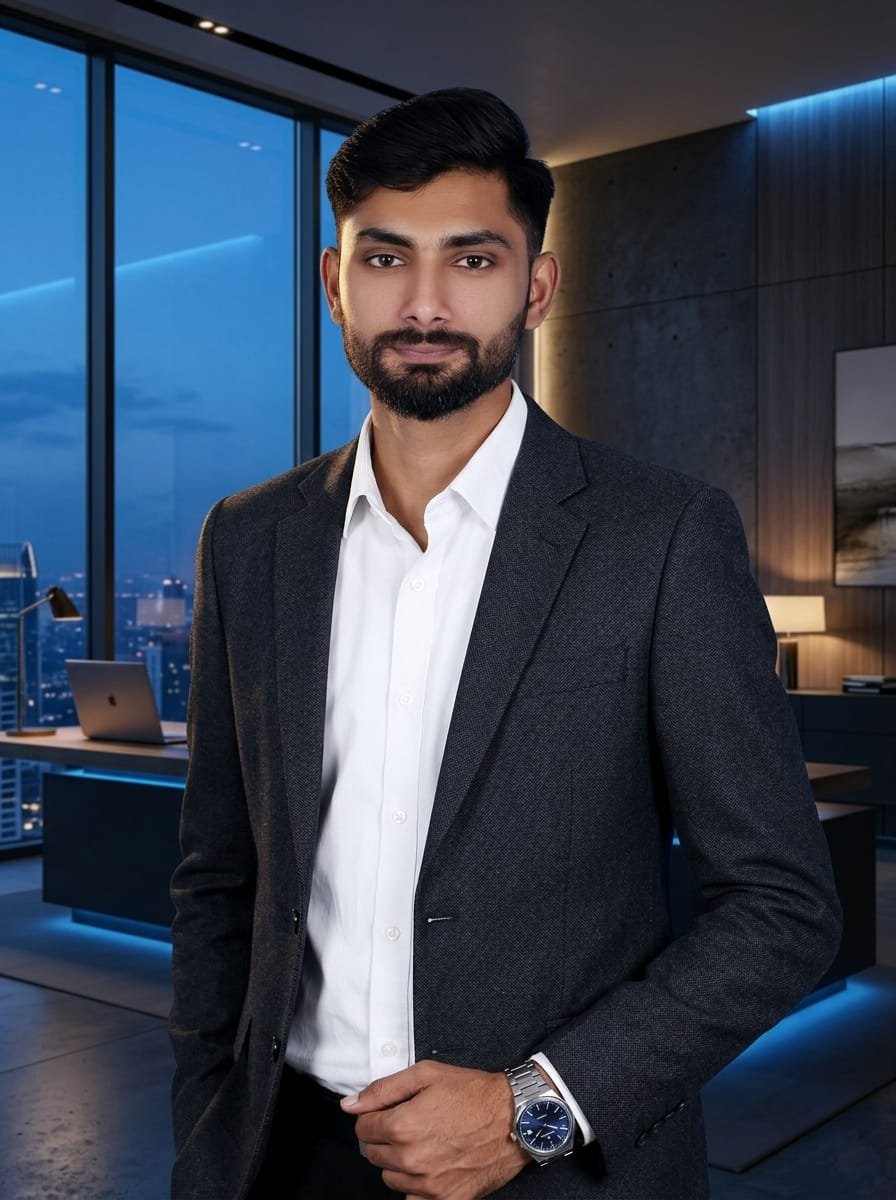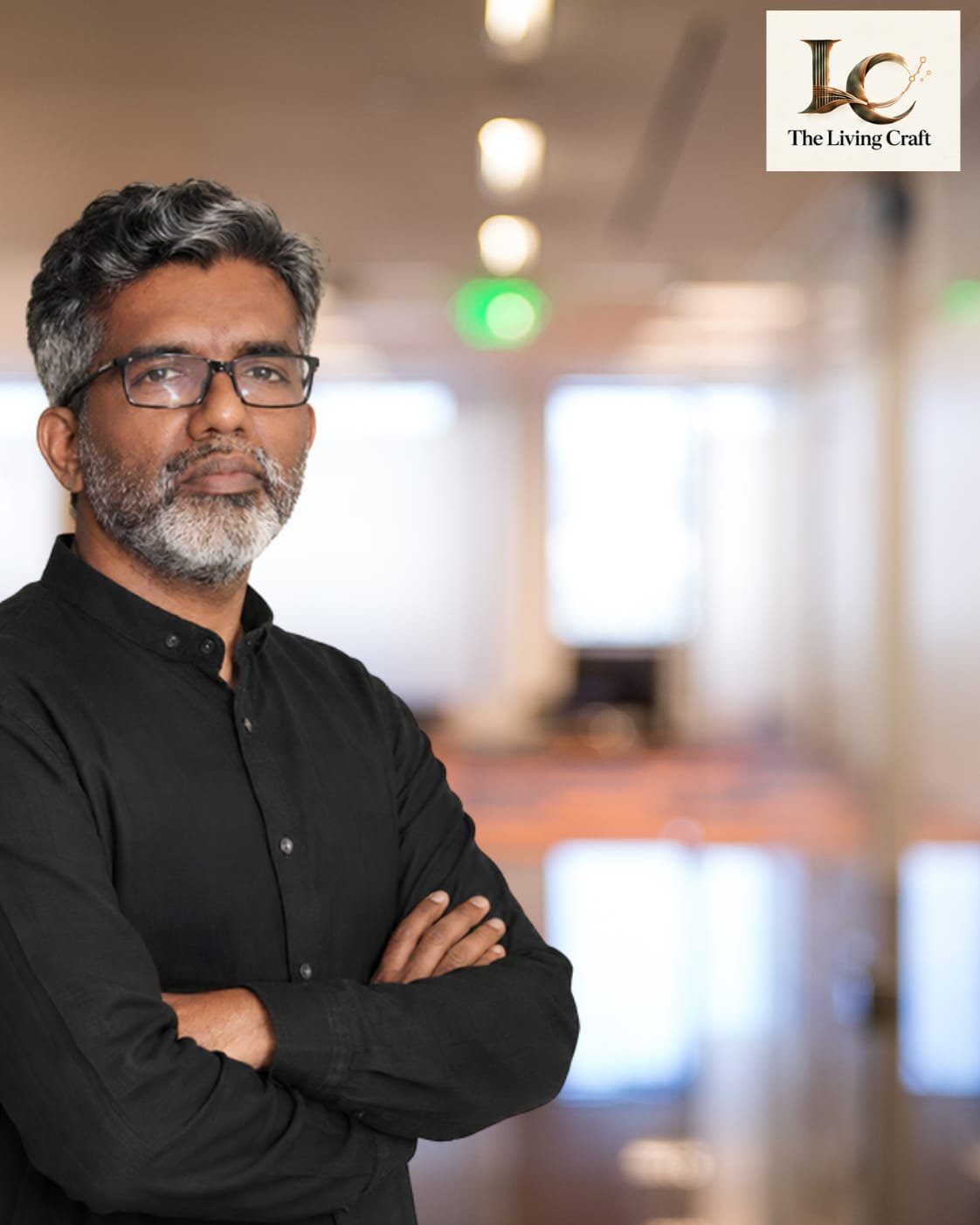
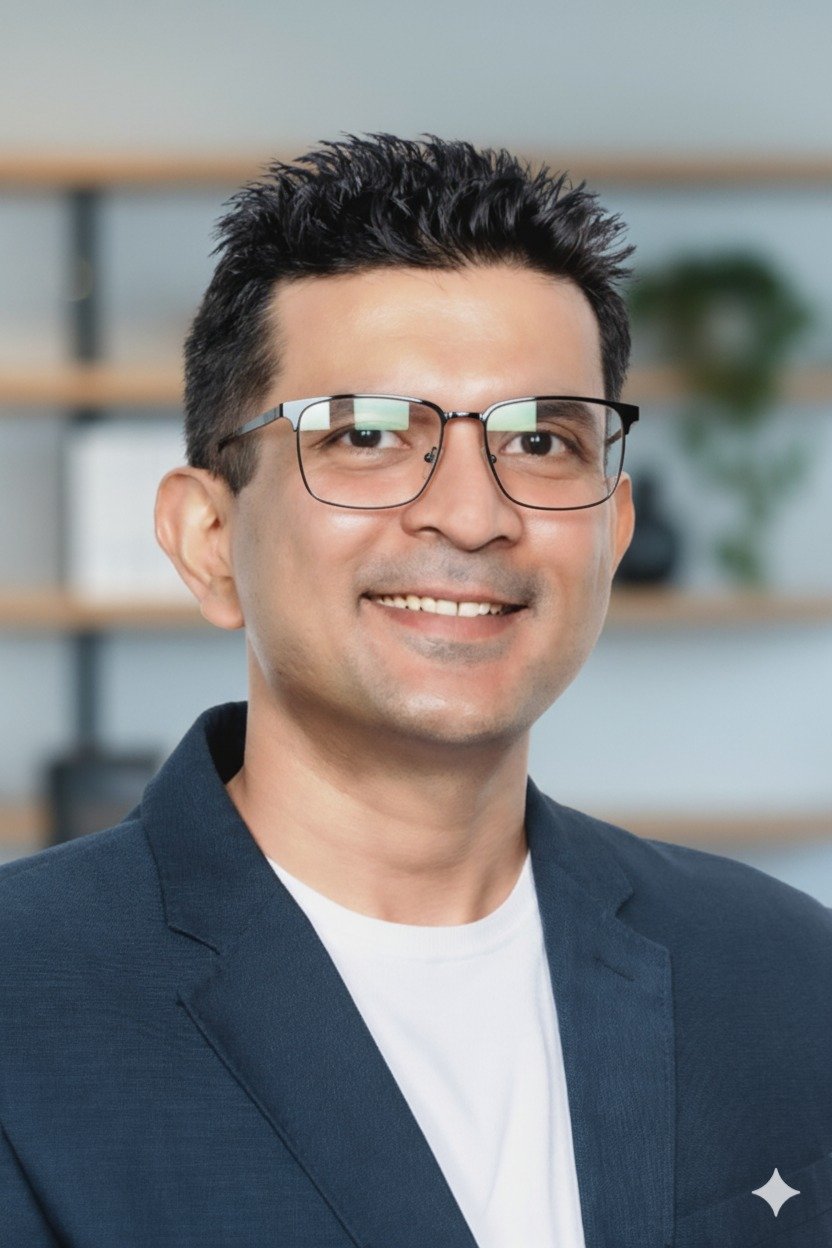
At the heart of that journey is Piyush’s belief that the future of marketing isn’t about simply finding people with large audiences. It is about finding the right voices, the right communities and the right stories — and connecting them with brands in ways that feel authentic while still delivering measurable business outcomes.
From the Streets of Delhi to Wall Street then back to Building in the Creator Economy
Piyush’s entrepreneurial story did not begin with a conventional startup playbook.
His professional journey began at just 17, when he entered the workforce and started earning ₹4,500 a month. Within two years, he had multiplied his income several times over and, remarkably early in his career, found himself working with a Wall Street-based firm in New York.
That early experience exposed him to something that would become a recurring theme throughout his career: the importance of understanding how businesses actually grow.
Rather than seeing marketing as simply communication, Piyush developed an interest in the mechanics behind growth — how brands acquire customers, how businesses build trust, how consumers make decisions and how technology changes the way markets operate.
His journey from Delhi to New York eventually evolved into a much broader entrepreneurial career, culminating in his decision to build in one of the most rapidly changing areas of modern business: the creator economy. His own account of that journey describes the transition from his early working years in Delhi to his experience on Wall Street and eventually into entrepreneurship
Seeing the Creator Economy Before It Became Mainstream
There was a time when influencer marketing was largely viewed as a celebrity endorsement business.
Brands would identify someone with a large following, pay for a post, and measure success largely through impressions and likes.
Piyush saw a different future.
He recognised that social platforms were creating an entirely new class of entrepreneurs — individuals who weren’t merely creating content, but building communities, businesses, products and personal brands around their influence.
That belief became one of the foundations for Saucee.
In a LinkedIn reflection on his decision to enter the creator economy, Piyush described creators moving beyond traditional social media into virtual spaces, building micro-communities, launching products and developing multiple monetisation streams. His thesis was simple: the creator economy was not merely another marketing trend; it represented a fundamental change in how consumers discover, trust and buy.
And that insight has aged remarkably well.
Today, creators influence everything from fashion and beauty to food, technology, finance, wellness and consumer products. The creator is no longer simply the person delivering the advertisement.
The creator is becoming the media company.
Saucee: Where Brands Meet Creators
Founded around this opportunity, Saucee was built to solve a problem that was becoming increasingly important for modern brands:
How do you turn creator influence into actual business growth?
The answer isn’t simply to hire more influencers.
It requires understanding:
Audience behaviour
Creator credibility
Content formats
Platform dynamics
Brand positioning
Consumer psychology
Performance data
Conversion
Long-term creator relationships
Saucee’s public positioning reflects this intersection, describing the company as a digital marketing agency with capabilities spanning influencer marketing, content creation and creative production across multiple platforms.
The ambition has always been bigger than executing individual influencer campaigns.
It is about building a repeatable creator-led growth engine for brands.
Moving Beyond Followers
One of the biggest changes in influencer marketing over the years has been the shift away from simply asking:
“How many followers does this creator have?”
Piyush’s approach has consistently pushed toward a more sophisticated question:
“Does this creator have the ability to influence this particular audience?”
That distinction is fundamental.
A creator with 25,000 highly engaged followers within a specific category can sometimes be far more valuable to a brand than a celebrity with several million followers and limited relevance to the product.
Piyush has publicly advocated choosing relevance over follower count, giving creators creative freedom, studying performance data beyond vanity metrics and building long-term partnerships rather than relying solely on one-off collaborations.
That philosophy has helped Saucee approach influencer marketing as a combination of human intelligence, creative storytelling and measurable performance.
The Creator Is Not an Advertisement
Perhaps one of the most important shifts in Saucee’s philosophy is the belief that creators should not be treated like advertising inventory.
The strongest creator campaigns don’t feel like advertisements.
They feel like:
Recommendations.
Stories.
Experiences.
Opinions.
Discoveries.
That is why creative freedom matters.
A creator knows their audience better than a brand brief ever can.
Give them a rigid script, and the content can feel forced.
Give them a strong strategic direction and the freedom to express it authentically, and the content can become something much more powerful.
Piyush has articulated this philosophy directly: the best influencer content feels authentic rather than scripted, while storytelling should take precedence over conventional advertising.
Building Growth, Not Just Reach
The creator economy has also evolved from a primarily awareness-driven channel into an increasingly measurable business-growth channel.
Today, brands want to understand:
Who saw it?
Who engaged?
Who clicked?
Who saved?
Who visited the website?
Who bought?
Who came back?
Saucee’s approach reflects this evolution.
Instead of stopping at reach and views, the agency looks at the broader performance ecosystem — including engagement, clicks, conversions and the quality of audience interaction. Piyush has specifically emphasised the importance of looking beyond vanity metrics when evaluating creator campaigns.
This has become particularly important as India’s D2C ecosystem has matured.
For emerging brands, every marketing rupee needs to work harder.
Creator marketing therefore has to deliver more than visibility.
It needs to contribute to brand growth.
Helping D2C Brands Find Their Voice
The rise of India’s D2C ecosystem has created thousands of ambitious consumer brands.
But building a product is only half the challenge.
The bigger challenge is getting consumers to notice it, understand it and trust it.
Creators can bridge that gap.
A founder may spend months developing a product.
A consumer may understand it in 30 seconds through the right creator.
That is the power of creator-led storytelling.
Saucee has increasingly operated at this intersection — helping brands translate their products into stories that consumers can understand and creators can genuinely own.
Piyush’s own public commentary increasingly focuses on this exact challenge: how D2C brands can use authentic creator relationships while connecting influencer activity to measurable ROI and long-term brand building.
The Power of Micro and Niche Communities
Another important evolution has been the rise of smaller creators.
The old influencer hierarchy was simple:
Celebrity → Macro → Micro → Nano
The new creator economy is much more fragmented.
There are creators for:
Dermatology
Running
Gaming
Parenting
Men’s grooming
Luxury
Personal finance
Home decor
Fitness
Food
Fashion
Travel
Entrepreneurship
And within these communities are creators who may have relatively modest follower counts but enormous influence within their niche.
Saucee’s philosophy increasingly reflects this understanding.
Influence is contextual.
A creator doesn’t need to influence everyone.
They need to influence the right people.
The Creator Ecosystem Is Bigger Than Instagram
Another defining aspect of Saucee’s evolution is recognising that creators don’t belong to a single platform.
Instagram is powerful.
But creators are simultaneously building audiences across:
YouTube.
Short-form video.
LinkedIn.
Podcasts.
Communities.
Private groups.
Commerce platforms.
Their own products.
This multi-platform behaviour is one of the reasons the creator economy represents such a fundamental change in media.
The creator isn’t renting an audience forever.
They are building an intellectual property and community asset.
That creates opportunities for creators to become founders, investors, product developers and media entrepreneurs.
And Saucee’s role increasingly sits at that intersection.
From Campaign Execution to Creator Partnerships
Perhaps the biggest evolution in the industry is moving from:
“Do one post.
to:
“Build a relationship.
One campaign can generate awareness.
A six-month creator relationship can generate brand memory.
Consumers become familiar with the creator using a product repeatedly.
The recommendation becomes more credible.
The product becomes part of the creator’s lifestyle.
And eventually, the brand stops feeling like an advertiser.
It becomes part of the creator’s world.
Piyush has repeatedly advocated long-term creator relationships over one-off campaigns because consistent associations can strengthen brand recall and audience trust.
This philosophy is particularly relevant to brands trying to move from transactional growth to sustainable brand equity.
Technology Meets Human Intelligence
The creator economy is enormous.
And managing it manually becomes increasingly difficult as campaigns scale.
Thousands of creators.
Millions of pieces of content.
Multiple platforms.
Different audience segments.
Different commercial models.
Different performance indicators.
Technology can help identify patterns.
Data can help brands make better decisions.
But Piyush’s philosophy doesn’t appear to be technology versus people.
It is technology with people.
That combination — data-driven decision making supported by human understanding of creators, content and culture — is where the next generation of influencer marketing is likely to be built.
Saucee’s positioning around influencer intelligence, creator relationships and creative production reflects this convergence.
Building an Ecosystem, Not Just an Agency
Perhaps the most interesting part of Piyush’s journey is that his ambitions extend beyond building a traditional marketing services company.
His public activity shows an increasing engagement with India’s broader D2C and startup ecosystem, including investment and founder-oriented conversations. He was also recently recognised in a public feature around India’s influential D2C angel ecosystem.
That creates a natural flywheel:
Creators → Brands → Consumers → Data → Insights → Better campaigns → Stronger brands → More creator opportunities.
And eventually:
Creators become founders.
Founders become brands.
Brands create communities.
Communities create new creators.
The ecosystem continues to expand.
Saucee’s Real Contribution to the Creator Economy
It is tempting to measure an influencer marketing agency by the number of campaigns it executes.
But the more meaningful contribution is harder to measure.
It is the number of creators who got their first meaningful brand opportunity.
The number of creators who learned how to negotiate professionally.
The number of creators who turned content into a career.
The number of brands that discovered a new audience.
The number of founders who realised that creators could become a growth engine.
The number of businesses that moved from traditional advertising to authentic community-led storytelling.
That is where Saucee’s contribution becomes more significant.
Because the company isn’t simply participating in the creator economy.
It is helping build the infrastructure around it.
Piyush Arora’s Leadership Philosophy
At the centre of Saucee is a founder who appears to approach entrepreneurship through a combination of curiosity, relationships and relentless experimentation.
His LinkedIn presence reflects a consistent interest in marketing, entrepreneurship, brand building and the creator economy. He currently has a substantial professional audience on LinkedIn, where he regularly shares perspectives on influencer marketing, D2C growth and entrepreneurship.
His leadership philosophy can perhaps be distilled into a simple idea:
Don’t chase what’s popular.
Understand what’s changing.
Then build for where the market is going.
That mindset helped him recognise creators as a major economic force before the category fully matured.
And today, it continues to shape Saucee’s approach to brands, creators and content.
The Road Ahead
The next chapter of the creator economy will be fundamentally different from the last.
Creators will increasingly become:
Founders.
Investors.
Media companies.
Product developers.
Community builders.
Educators.
Entrepreneurs.
And brands will increasingly recognise that their strongest advocates may not come from traditional media.
They may come from a creator with 20,000 followers who has spent five years earning the trust of a particular community.
This is the future Saucee is positioned to participate in.
Not simply by asking:
“Who is the biggest influencer?”
But by asking:
“Who has the influence that matters?
And then building the strategy, content and relationships required to turn that influence into sustainable growth.
From Streets of Delhi to the Future of Creator-Led Growth
Piyush Arora’s journey is ultimately not just a story about influencer marketing.
It is a story about recognising change.
From earning ₹4,500 a month at 17 to experiencing the world of Wall Street, from building businesses to entering the creator economy, his professional journey has repeatedly been defined by learning, adapting and identifying the next opportunity. His own “Streets of Delhi to Wall Street” series reflects that journey and the lessons accumulated along the way.
Saucee represents the next chapter of that journey.
A company built around the belief that creators can build brands, brands can build communities, and authentic influence can drive measurable business growth.
And as India’s creator economy continues to mature, the opportunity is no longer simply to participate in it.
It is to help shape what it becomes.
Saucee is building for exactly that future.
Saucee.ai