India is no longer a market global beauty brands can afford to watch from the sidelines. International skincare, make-up, fragrance and professional beauty labels are expanding their presence as premium consumption deepens beyond the metros. Amazon India has said it plans to add more than 100 premium beauty brands in 2026, while its premium beauty segment has been growing at roughly 50% year on year. More than half of that demand is now coming from Tier-2 and Tier-3 cities.
But entering India and building India are two very different things.
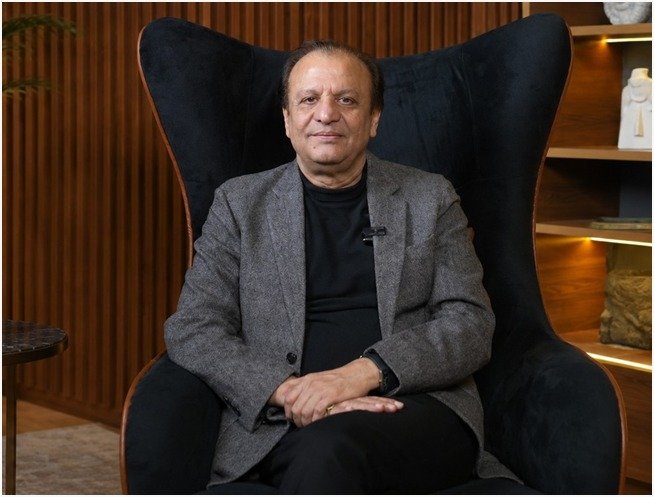
For Pradip Vverma, Founder of Euro Kosmetik India Pvt. Ltd., the next phase of the beauty market will not be decided only by which global brand arrives first. It will be decided by which brands build the strongest local ecosystem around distribution, education, authenticity and availability.
India Is Not One Beauty Market
Vverma has spent nearly three decades working across professional make-up, imported cosmetics, dermatology-linked beauty, training and distribution. Since Euro Kosmetik India was established in 1998, the company has worked across professional beauty, distribution, training and market development in India and neighbouring South Asian markets.
That experience has shaped one of Vverma’s strongest beliefs: a global reputation may create initial demand, but it does not remove the complexity of the Indian market.
India varies sharply by city, customer segment, professional community, price sensitivity and retail environment. A product that gains traction with a make-up artist in Mumbai may require a completely different route to adoption in Guwahati, Lucknow or Coimbatore.
This matters even more as premium beauty expands outside traditional metro markets. Amazon India says more than 50% of its premium beauty demand now comes from Tier-2 and Tier-3 cities, signalling that aspiration has travelled faster than many brands’ physical distribution networks.
Distribution Is More Than Moving Boxes
In beauty, distribution is often reduced to logistics: stock, warehouses, retailers and delivery. Vverma sees it differently.
For professional products, distribution must also create confidence. Artists need product knowledge. Academies need training. Retailers need the right assortment and merchandising. Consumers need authenticity. International brands need partners who understand where the product fits, who should sell it and how the market should be educated.
As Vverma’s business philosophy puts it, “Products alone do not build markets. Education, availability, trust and technical standards build markets.”
That distinction is becoming more important as global brands increase their India presence. Dolce & Gabbana Beauty, for instance, opened its first standalone boutique in India in Noida in 2026, reflecting the wider interest international beauty companies are showing in the country.
The opportunity is clear. The execution is harder.
A brand can generate attention through creators, social media or a high-profile launch. But if products are frequently unavailable, the wrong channels are chosen, professionals are not educated, or regional demand is misunderstood, awareness does not automatically translate into a sustainable market.
The Next Advantage Will Be Local Intelligence
The winners in India’s next beauty cycle may therefore be the brands that combine global product strength with local intelligence.
For Pradip Vverma, this means treating India not simply as a sales territory, but as an ecosystem of artists, academies, retailers, salons, dermatology clinics, distributors and increasingly sophisticated consumers.
His own journey reflects that philosophy. Euro Kosmetik India has built its model around bringing professional beauty products to market while supporting distribution, training and category development.
As more international brands enter India, the competitive question is changing. It is no longer only:
“Is the Indian customer ready for this brand?”
The more important question is:
“Has the brand built the right system to reach, educate and retain that customer?”
In a market becoming more crowded every year, distribution may no longer be the backend of the beauty business.
It may become the strategy.