Most people do not seek astrology out of curiosity. They arrive at it at a point of friction—when effort stops translating into results, when decisions feel uncertain, or when life begins to repeat patterns that no longer make sense.
At that stage, the question is rarely just about the future. It is deeper and more unsettling: Why is this happening, and why does it keep happening?
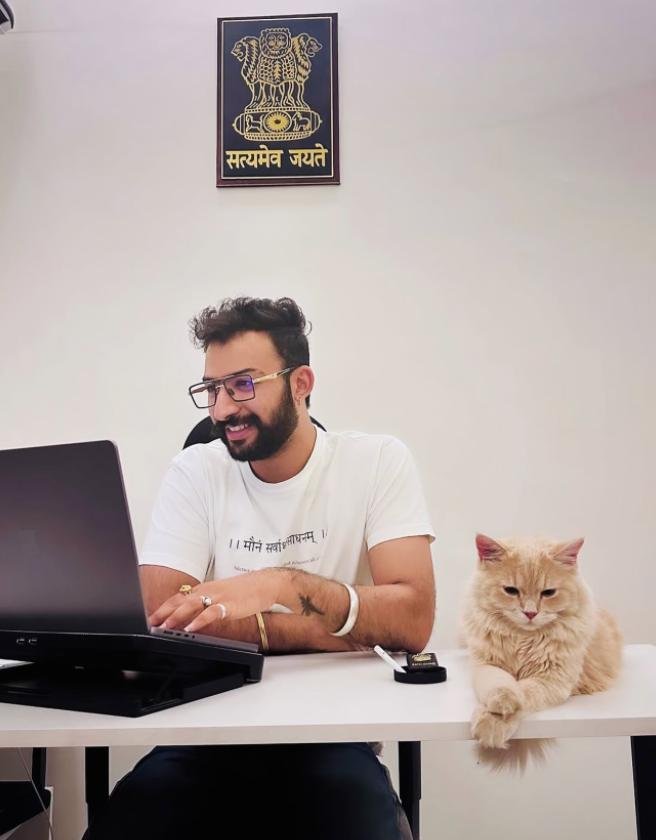
For Anmol Kapoor, a Vedic astrologer known for his research-oriented approach and the founder of AstroTwelve, this is where a real astrology consultation begins. Not with prediction, but with diagnosis.
Through his work across AK Astrology TV—his YouTube platform—and his structured offerings on AKAstrologyTV.com, Kapoor represents a distinct shift in how astrology is being practiced and understood in the modern context. His approach moves away from the spectacle of quick predictions and toward a more layered process rooted in pattern recognition, timing analysis, and alignment with one’s inherent nature.
“A serious consultation is not about telling someone what will happen in one sentence,” his work consistently suggests. “It is about understanding the structure behind what is already happening.”
This distinction is critical. Popular astrology often operates on generalized statements, designed to resonate broadly. In contrast, classical Vedic astrology—when applied rigorously—functions as a detailed interpretative system. A birth chart is not treated as a static diagram but as a dynamic map of tendencies, behavioral patterns, karmic themes, and time cycles.
When Kapoor approaches a chart, the immediate concern is not to answer the surface-level question, but to identify the deeper pattern driving it. A client may present a concern related to career, relationships, finances, or emotional instability. But beneath each of these lies a repeating structure—one that astrology, when used correctly, can reveal with surprising clarity.
This process unfolds through layers. The first is pattern recognition: identifying recurring themes in a person’s life. The second is timing: understanding which planetary periods or dasha cycles are active, and how they are influencing outcomes. The third—and often the most overlooked—is alignment.
It is here that Kapoor’s philosophy becomes particularly distinct.
He often frames astrology not as a tool for control, but as a system for understanding flow. The idea is simple, but profound: every individual has a natural direction, a way in which their life energy tends to move. Difficulty arises not only from external challenges, but from prolonged resistance to that internal design.
To illustrate this, he refers to a widely understood analogy: judging a fish by its ability to climb a tree. The failure is not in the fish—it is in the misunderstanding of its nature. Similarly, individuals often spend years attempting to force outcomes that are misaligned with their inherent tendencies, only to encounter repeated frustration.
A serious astrology consultation, in this context, becomes an exercise in realignment.
It does not remove effort from the equation. Instead, it refines it. If a person’s natural trajectory favors gradual, structured growth, attempts at rapid, high-risk expansion may consistently fail. If emotional stability is a central requirement in a chart, repeated engagement with instability will produce predictable results. These are not abstract ideas—they are patterns that, once recognized, begin to explain a significant portion of lived experience.
What distinguishes Kapoor’s method is that it stops short of fatalism. The goal is not to convince a person that their life is fixed, but to show that their actions become more effective when aligned with timing and nature. In this sense, astrology becomes less about prediction and more about intelligent participation in one’s own life.
This approach has found increasing resonance with a younger, more analytically inclined audience—individuals who are not satisfied with vague reassurance, but are open to structured frameworks that explain complexity. Through AK Astrology TV, Kapoor has introduced deeper astrological concepts in a format that remains accessible without oversimplifying them. His platform AstroTwelve, along with his consultation and course offerings, reflects a similar intent: to move individuals from passive curiosity to active understanding.
Importantly, this shift also changes the emotional experience of astrology. Instead of leaving a session with anxiety about what may happen, individuals often leave with a clearer sense of why things are happening—and how to respond more effectively. The emphasis moves from fear to clarity, from reaction to awareness.
In a broader sense, this reflects a changing relationship between modern individuals and traditional knowledge systems. There is a growing recognition that while technology has accelerated life, it has not necessarily made it easier to understand. Systems like Vedic astrology, when approached with rigor, offer a different kind of intelligence—one that deals not with speed, but with timing; not with control, but with alignment.
In Kapoor’s work, this intelligence is neither diluted nor dramatized. It is applied.
And perhaps that is what defines a serious astrology consultation in the truest sense—not the promise of knowing the future, but the ability to understand the present with greater precision.
Because once the pattern becomes visible, the path, in many cases, begins to reveal itself.
AK Astrology TV