
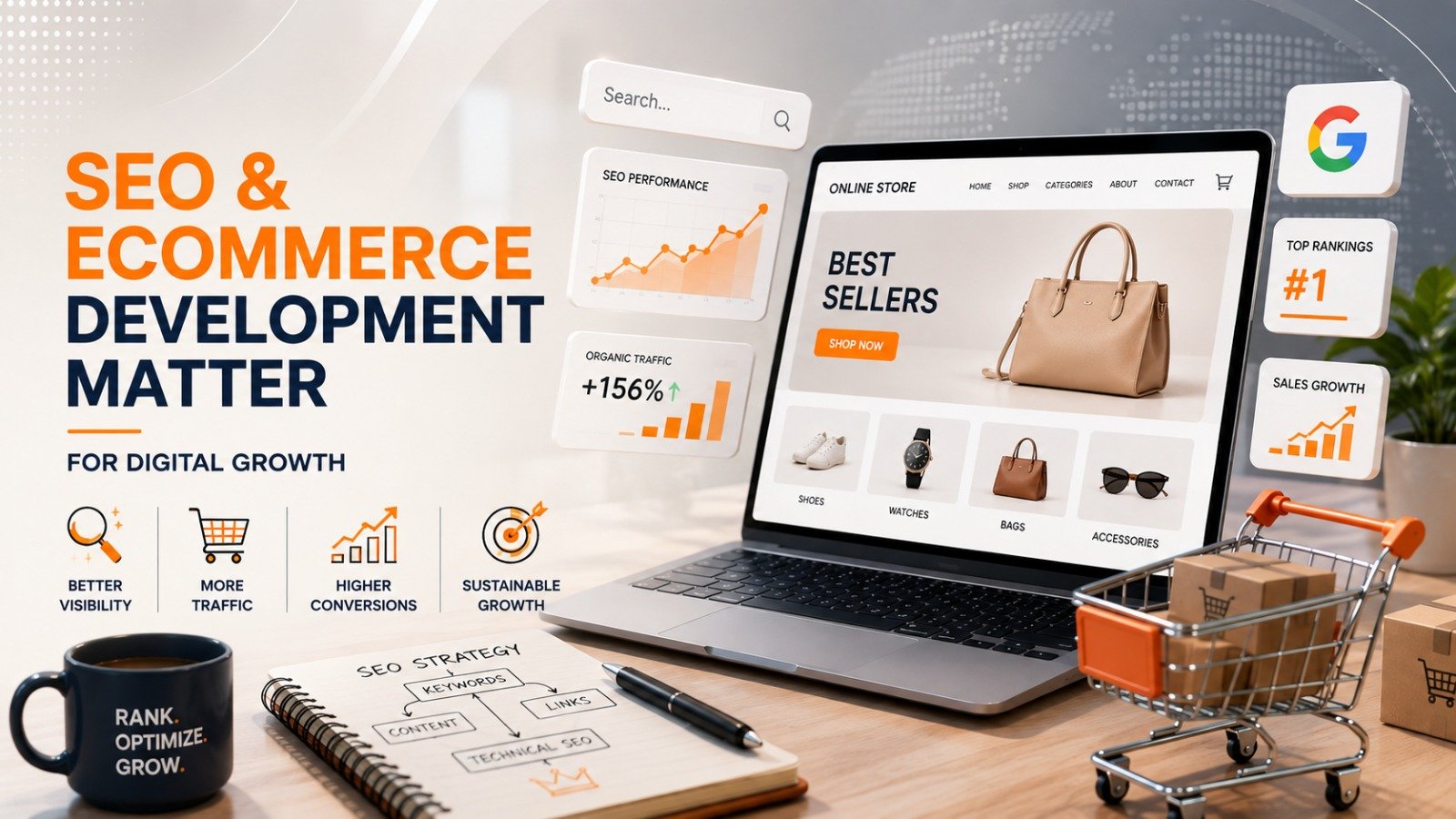
Search visibility isn’t just about ranking for a handful of keywords anymore — it’s about whether a brand shows up at all in the exact moment someone is deciding where to buy, book, or work with. A product buried on page three of search results might as well not exist, no matter how good it is. This is the core problem SEO services by IM Digital are built to solve: making sure a brand’s most important pages are visible, credible, and easy for both users and search engines to trust. Trust, in particular, is earned the same way offline reputations are — through genuine mentions and coverage from credible sources, which is part of why Google explicitly addresses link credibility in its own Google Search Central guidance on qualifying outbound links.
How Ecommerce SEO Improves Product Discovery
For ecommerce brands specifically, this visibility problem shows up at the product level, not just the homepage. A shopper searching for a specific item rarely browses an entire catalog to find it — they expect a search engine, or increasingly an AI-powered answer, to surface the right product directly. That depends on far more than good photography or pricing; it requires structured product data, clear category architecture, fast-loading pages, and content that actually answers what a buyer is searching for. This is exactly what dedicated ecommerce SEO services focus on — treating every product and category page as its own discoverability problem instead of assuming general SEO practices will cover it. Brands that get this right consistently see more of their catalog generating organic traffic, rather than a handful of top sellers carrying the entire store.
Why Ecommerce Development and SEO Should Work Together
SEO strategy and ecommerce development are often treated as separate workstreams, handled by separate teams, and that’s usually where problems start. A store can publish perfectly optimized product content and still lose rankings because the underlying platform is slow, has duplicate URLs, or blocks search engines from indexing key pages. This is why ecommerce development services need to account for search performance from the architecture stage, not after launch. In practice, a handful of technical fundamentals tend to make the biggest difference: page load speed on mobile devices, a clean and consistent URL structure across categories and products, navigation that search engines can actually crawl and follow between related items, and structured data that clearly communicates pricing, availability, and reviews to both shoppers and search engines. None of this is a one-time setup — as a catalog grows, the technical foundation has to scale with it, which is exactly where ecommerce development and SEO planning need to stay connected rather than working from separate roadmaps.
AI Search Optimization and the Future of Digital Visibility
Search behavior itself is shifting. A growing share of queries now get answered directly by AI-generated summaries and conversational search tools before a user ever clicks a traditional result, which means visibility increasingly depends on whether a brand’s content is structured clearly enough for those systems to reference it in the first place. AI search optimization isn’t a replacement for traditional SEO — it builds on the same foundation of clear structure, credible content, and technical accessibility, with added attention to how information is organized so it can be extracted and cited accurately by AI systems, not just crawled and ranked. Brands that treat this as a natural extension of existing SEO work, rather than a separate discipline, tend to adapt faster as search results continue to change.
How IM Digital Supports SEO, Ecommerce, and Digital Growth
Search visibility, ecommerce performance, and AI-readiness aren’t three separate initiatives — they’re different layers of the same underlying growth strategy, and treating them that way tends to produce far more durable results than optimizing each in isolation. As an IM Digital SEO services engagement typically shows, the goal isn’t chasing individual rankings; it’s building a digital foundation — technical, content, and platform — that keeps generating visibility and revenue without needing to be rebuilt every time search behavior shifts again. For brands weighing a SEO and digital marketing company to support that kind of long-term visibility, the most effective approach is usually the one that treats search, ecommerce, and growth as one connected system from the start.