For decades, critical care has been synonymous with hospital corridors, beeping monitors, and restricted access. The ICU has traditionally been a space where survival depends not just on treatment, but on proximity to advanced technology and skilled professionals. But a quiet revolution is underway, one that is reshaping how, where, and for whom critical care is delivered.
Welcome to the Era of the Critical Care Specialist Driven ICU Care at Home.
This is not merely home care with a few devices. It’s a brain child of Dr Suneel Kumar Garg, a highly qualified renowned Critical Care Doctor. It is a fully integrated, high-acuity care model that brings ICU-level monitoring, expertise, and intervention into the comfort of a patient’s home, powered by digital technology, real-time data, and specialized clinical teams.
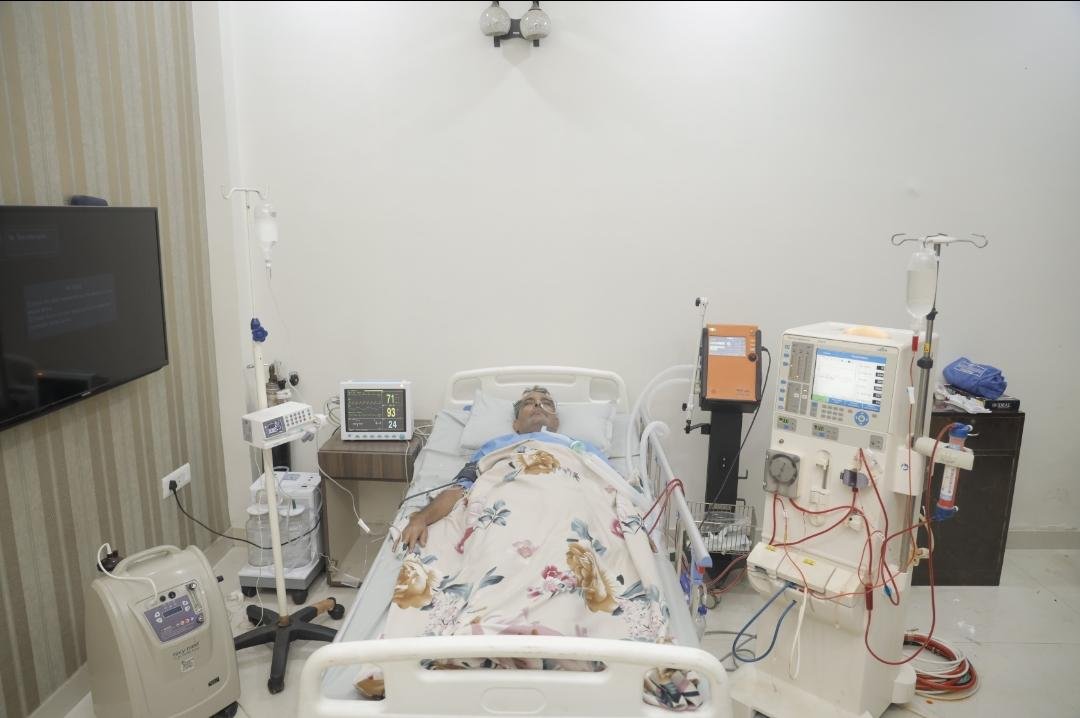
At its core, Critical Care Specialist Driven ICU Care at Home, by Saiman Healthcarereplicates the clinical environment of a hospital ICU. Patients are supported with advanced equipment such as ventilators, infusion pumps, multiparameter monitors, syringe pumps, and oxygen delivery systems. But what truly distinguishes this model is its digital backbone with 24×7 availability of Critical Care Team. Every vital sign- heart rate, oxygen saturation, blood pressure, respiratory patterns is continuously transmitted to a centralized command center.Here, a team of intensivists, critical care nurses, and technicians monitor patients 24/7. Using AI-enabled alerts and predictive analytics, they can detect early signs of deterioration, often before symptoms become clinically evident. This proactive approach allows for timely interventions, reducing complications and improving outcomes.
The story of Critical Care Specialist Driven ICU Care at Home is not just about technology; it is about transforming the patient experience.For families, the ICU often means emotional distance, limited visiting hours, anxiety, and helpless waiting. At home, that dynamic changes completely. Patients are surrounded by loved ones, familiar environments, and psychological comfort, which plays a crucial role in recovery. Studies increasingly show that healing is not purely physiological; emotional well-being significantly influences outcomes, especially in long-term critical illnesses.
For patients requiring prolonged ICU care, such as those recovering from severe infections, neurological conditions, or post-surgical complications, the home ICU model offers dignity and continuity. Instead of extended hospital stays, they transition into a personalized care environment without compromising medical intensity.From a healthcare system perspective, the implications are profound.
ICUs are among the most resource-intensive units in any hospital. Bed shortages, high costs, and staff burnout are ongoing challenges, particularly in densely populated regions. Critical Care Specialist Driven ICU Care at Home help decentralize critical care, freeing up hospital resources for the most acute cases while maintaining high standards of care outside traditional settings.
Cost efficiency is another compelling factor. Prolonged ICU stays can be financially devastating for families. Home-based critical care significantly reduces overhead costs while delivering comparable, and in many cases superior, patient satisfaction and outcomes. There is huge reduction in hospital acquired infection also, while patients are being treated and monitored at home.
However, this transformation is not without challenges.Establishing a high-end Critical Care Specialist Driven ICU Care at Home requires robust infrastructure, stringent protocols, and seamless coordination between on-ground caregivers and remote specialists. Training of staff, infection control, emergency response systems, and equipment reliability must meet ICU-grade standards. Regulatory frameworks are still evolving, and ensuring quality consistency across providers remains a key concern.
Yet, the momentum is undeniable.Advancements in telemedicine, wearable devices, and cloud-based health platforms have accelerated adoption. What once seemed futuristic is now becoming an essential component of modern healthcare delivery. In regions where hospital access is limited or overburdened, Critical Care Specialist Driven ICU Care at Home are not just an innovation, they are a necessity.
The COVID-19 pandemic acted as a catalyst, exposing the vulnerabilities of centralized healthcare systems and highlighting the need for scalable, decentralized solutions. Since then, the concept of “care beyond walls” has gained widespread acceptance among clinicians, patients, and policymakers alike.
Looking ahead, the future of Critical Care Specialist Driven ICU Care at Home is deeply intertwined with artificial intelligence and predictive medicine. Imagine a system that not only monitors but anticipates complications, adjusting treatments in real time, preventing crises before they occur. Integration with electronic health records, genomics, and personalized medicine will further refine care delivery.
But perhaps the most powerful aspect of this evolution is its human impact. It brings critical care closer, not just geographically, but emotionally. It restores a sense of control and comfort to patients and families during some of their most vulnerable moments. It challenges the long-held belief that life-saving care must be confined within hospital walls.
Critical Care Specialist Driven ICU Care at Home is not replacing hospitals; it is extending them. It represents a hybrid future, where technology and compassion converge, where care is continuous rather than confined, and where the definition of an ICU is no longer a place, but a capability.
As healthcare continues to evolve, one thing is clear: the ICU of tomorrow may not be a room in a hospital, but a network of care, intelligent, responsive, and right at home.